




What's Happening?
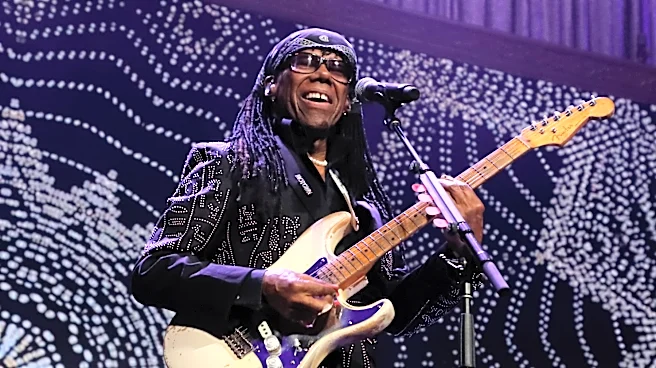
Nile Rodgers, the renowned musician from Chic, has publicly defended his decision to utilize artificial intelligence (AI) in the music video for his forthcoming charity single, 'The Christmas Song.' The single features singer Rebecca Ferguson. Rodgers revealed
that he underwent an 'AI capture' process to create an 'AI me' for the video. This announcement drew criticism from some of his followers, who expressed concerns about the use of AI in creative works. In response to these criticisms, Rodgers engaged with his audience in the comments section, asserting that it is 'somewhat hypocritical' for individuals to oppose AI while simultaneously benefiting from its conveniences in their daily lives. His defense highlights a growing debate within the entertainment industry regarding the ethical and practical implications of integrating AI into artistic production.
Why It's Important?
Rodgers' decision and subsequent defense underscore a significant and evolving discussion within the music and broader entertainment industries concerning the role of artificial intelligence. This event is important because it brings a high-profile artist into the conversation, potentially influencing public perception and industry practices. The use of AI in creating digital likenesses raises questions about intellectual property, artistic authenticity, and the future of human employment in creative fields. For artists, it presents new tools for expression but also challenges traditional methods of production and compensation. For consumers, it blurs the lines between human-created and AI-generated content, prompting discussions about value and originality. The debate also reflects broader societal anxieties about technological advancement and its impact on human endeavors.
What's Next?
The controversy surrounding Nile Rodgers' use of AI in his music video is likely to fuel further discussions and potentially influence future industry standards and artist decisions. As AI technology continues to advance, more artists may explore its capabilities, leading to increased adoption or, conversely, stronger resistance from those concerned about its implications. This event could prompt industry bodies and artist unions to develop clearer guidelines or ethical frameworks for AI use in music and video production. Additionally, public reaction to the music video itself, once released, will be a key indicator of audience acceptance or rejection of AI-generated content. The ongoing dialogue may also lead to new legal challenges regarding copyright and ownership of AI-created or AI-assisted works.
Beyond the Headlines
Beyond the immediate controversy, Nile Rodgers' embrace of AI touches upon deeper philosophical and ethical questions about creativity and the definition of art in the digital age. The creation of an 'AI me' raises questions about identity, representation, and the potential for digital immortality for artists. It challenges the traditional notion of artistic creation as solely a human endeavor, pushing boundaries into collaborative models between humans and machines. This development could signal a long-term shift in how music and visual media are produced, potentially democratizing access to production tools while also raising concerns about the devaluation of human artistic labor. The ethical implications extend to the potential for AI to replicate or even surpass human creativity, prompting a re-evaluation of what it means to be a creator.