





What's Happening?
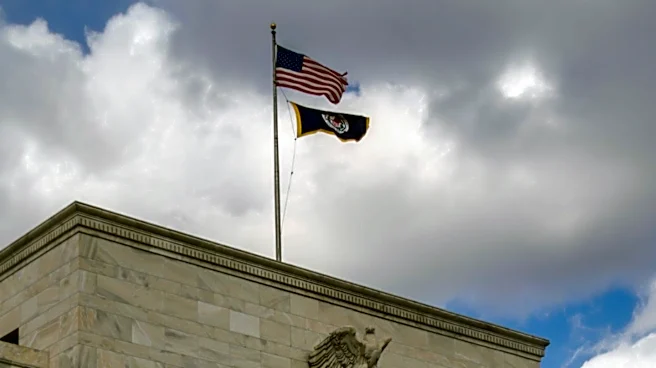
The Federal Reserve is contemplating an interest rate hike as inflation remains above its 2% target. Despite a weaker-than-expected jobs report, inflation data for July is anticipated to show a modest increase, keeping a September rate hike 'firmly in play,'
according to Bank of America Global Research. The central bank has maintained rates within a range of 3.5%-3.75% as it evaluates economic conditions. Market expectations suggest a potential rate increase in September or October, which would raise borrowing costs for consumers. Higher rates typically lead to increased costs for mortgages, car loans, and credit card debt, impacting consumer spending and financial planning.
Why It's Important?
The Federal Reserve's decision on interest rates is critical for the U.S. economy, influencing borrowing costs, consumer spending, and overall economic growth. Higher rates can curb inflation by reducing spending but also risk slowing economic activity. Consumers may face increased financial pressure as borrowing becomes more expensive, affecting their ability to purchase homes, cars, and other goods. The Fed's actions are closely watched by investors and policymakers, as they signal the central bank's approach to managing inflation and economic stability. The outcome of the Fed's decision will have significant implications for financial markets and economic policy.
What's Next?
The release of the July consumer price index will be a key factor in the Federal Reserve's decision-making process. If inflation continues to rise, the likelihood of a rate hike increases. The Fed will also consider other economic indicators, such as employment data and consumer sentiment, to assess the overall economic landscape. Stakeholders, including businesses and consumers, will need to prepare for potential changes in interest rates and adjust their financial strategies accordingly. The Fed's communication and guidance will be crucial in managing market expectations and ensuring economic stability.