





What's Happening?
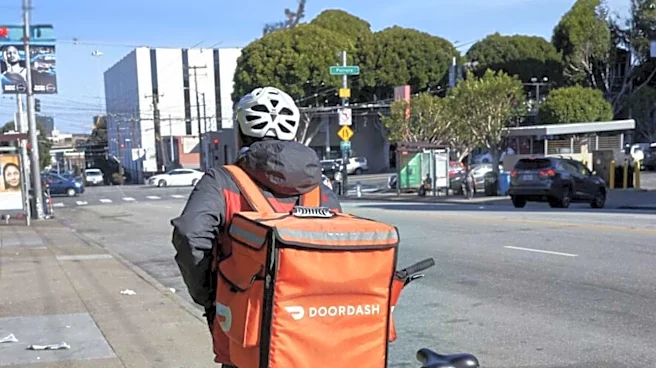
DoorDash has announced its acquisition of Instacart for approximately $17 billion. The deal, which values Instacart at $65 per share, represents a 26% premium over its closing price on October 22, the last trading day before news of the potential merger
emerged. The consideration for Instacart shareholders will be a mix of cash and DoorDash stock, with at least 75% of the payment in cash. DoorDash plans to fund the cash portion through existing capital and new borrowing, secured by a 364-day senior unsecured bridge loan from JPMorgan Chase Bank. The transaction is expected to close between late 2027 and the first half of 2028, a timeline that reflects an anticipated lengthy antitrust review by U.S., Canadian, and Israeli regulators. DoorDash co-founder and chief executive Tony Xu emphasized the complexities of online grocery delivery, while Instacart chief executive Chris Rogers highlighted the combined entity's ability to further transform online grocery.
Why It's Important?
This acquisition marks a significant consolidation in the U.S. on-demand delivery market, bringing together the leading restaurant delivery app with the leading grocery delivery app. The combined entity aims to strengthen competition against major online retailers like Amazon and Walmart, potentially offering a more scaled and independent alternative for consumers and local businesses. DoorDash argues that the merger will benefit consumers by allowing DashPass and Instacart+ members to pay a single membership fee, saving an estimated $100 million annually. However, the extended regulatory review period indicates that antitrust concerns are prominent. Regulators will scrutinize the deal's impact on market competition, particularly regarding potential monopolistic practices in the last-mile delivery sector. The outcome of this review will set a precedent for future mergers in the rapidly evolving e-commerce and delivery landscape, influencing how technology companies can expand their market share through acquisitions.
What's Next?
The acquisition faces a prolonged and rigorous antitrust review by regulatory bodies in the U.S., Canada, and Israel, with an expected closing date between late 2027 and mid-2028. DoorDash has already begun framing its pitch to regulators, emphasizing that the combined company will help local stores compete with larger online retailers, avoid grocery exclusivity, and allow Instacart shoppers flexibility in accepting DoorDash orders. Instacart shareholders will need to approve the deal, though approximately 19% of shareholders have already committed their support. Financially, DoorDash is expected to issue a sizable bond deal to refinance the bridge loan, creating new opportunities for investment banks. The market will also closely watch DoorDash's stock performance, as a rally could lead more Instacart holders to opt for shares, potentially triggering proration mechanisms in the deal terms. The ultimate decision by antitrust regulators will determine the future structure of the U.S. delivery market.
Beyond the Headlines
The DoorDash-Instacart merger highlights a broader trend of consolidation within the gig economy and on-demand services sector. This deal could reshape consumer expectations for convenience and delivery speed across various product categories, from prepared meals to groceries. Beyond the immediate market impact, the extended regulatory scrutiny reflects growing concerns about market concentration and its potential effects on labor practices within the gig economy. Regulators may examine how such a dominant entity could influence worker wages, benefits, and independent contractor status. The merger also raises questions about data privacy and the aggregation of consumer purchasing habits across different platforms. The integration of two vast customer and merchant datasets could offer unprecedented insights, potentially leading to more personalized services but also raising ethical considerations about data usage and competitive advantage. The outcome of this regulatory battle will likely influence future M&A strategies for tech giants seeking to expand their ecosystems.