




What's Happening?
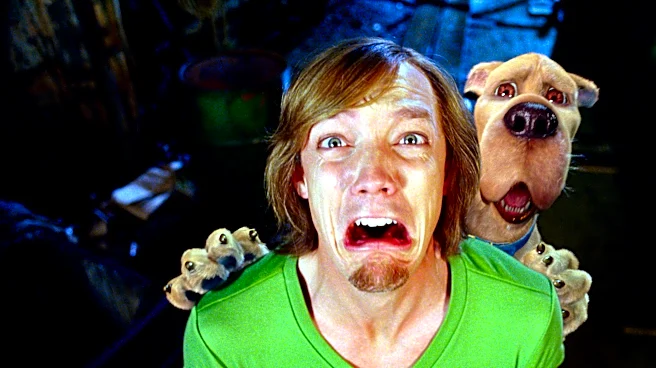
Actor Matthew Lillard has disclosed the significant financial difficulties he faced after the 2004 sequel, 'Scooby-Doo 2: Monsters Unleashed,' underperformed at the box office. Despite the first live-action 'Scooby-Doo' movie in 2002 earning $275 million
worldwide, the sequel's failure led to a downturn in Lillard's career. He recounted feeling immense pressure during the first film, believing it would launch him into major stardom. However, the subsequent lack of roles forced him and his wife, Heather Helm, to make drastic financial adjustments, including selling their cars and their house. Lillard described this period as a 'real nosedive' for his career, leading him to resent the 'Scooby-Doo' franchise for a time. He acknowledged that the earnings from the second film ultimately helped them navigate this challenging period.
Why It's Important?
This revelation highlights the precarious nature of careers in the entertainment industry, even for actors involved in successful franchises. It underscores how quickly an actor's market value can shift based on a single film's performance, leading to unforeseen financial instability. For Lillard, a perceived 'flop' directly resulted in personal economic hardship, forcing him to downsize his life and prompting his wife to return to work. This situation illustrates the broader impact of box office results beyond studio profits, affecting the livelihoods of individuals involved in film production. It also sheds light on the often-unseen struggles behind the glamorous facade of Hollywood, where even established actors can face significant career and financial setbacks.
What's Next?
While Lillard has since found continued success, including his enduring voice work as Shaggy in various 'Scooby-Doo' animated projects, his candid reflection serves as a cautionary tale within the industry. The experience led to a personal humbling for Lillard, shifting his perspective from aspiring 'big movie star' to embracing his identity as a character actor. This re-evaluation of his career path suggests a more grounded approach to his future roles and opportunities. The broader industry may continue to see actors share similar stories, contributing to a more realistic public understanding of the financial realities and career volatility in Hollywood, potentially influencing how emerging talent manages expectations and finances.
Beyond the Headlines
Lillard's story delves into the psychological and emotional toll that career instability can take on individuals in high-profile industries. His initial resentment towards 'Scooby-Doo' and subsequent gratitude for the financial cushion it provided reveals a complex relationship with his past work. This narrative also touches upon the societal pressure on actors to maintain a certain lifestyle, often leading to significant personal sacrifices when careers falter. It underscores the importance of financial prudence and adaptability in a volatile profession. Furthermore, his experience highlights the distinction between perceived success (a global box office hit) and sustained career momentum, suggesting that long-term viability often depends on more than just one or two major roles.