



What's Happening?
Soros Fund Management, the family office of billionaire George Soros, made substantial adjustments to its U.S. equity holdings during the third quarter. According to its latest 13F filing as of September 30, the fund dramatically increased its stake in Intel
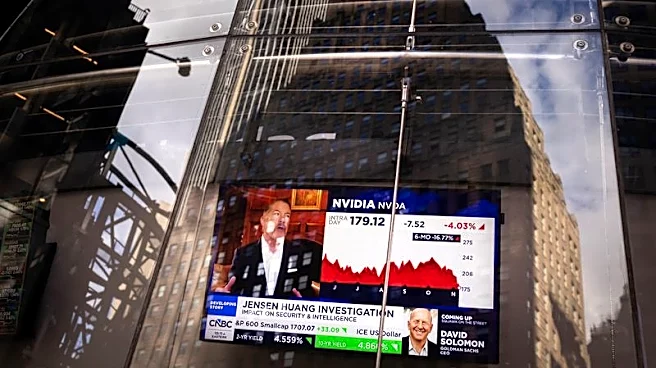
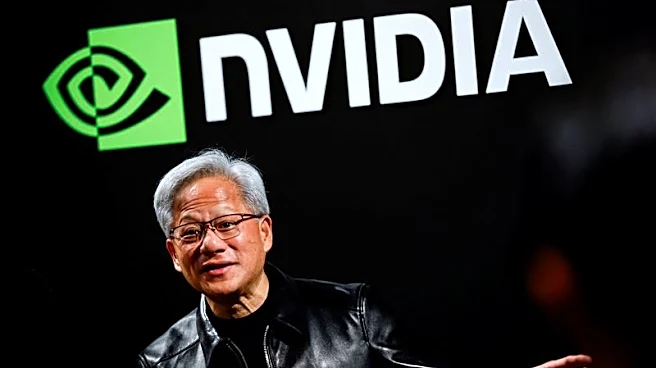
(INTC) from 100,000 shares to 2.83 million shares, representing a 2,730% surge. This Intel holding was valued at approximately $340.3 million at the quarter's end. Concurrently, the fund established a new position in SK Hynix American Depositary Receipts (ADRs), acquiring 325,000 shares valued at about $59.85 million. These moves indicate a strategic expansion into semiconductor companies, particularly those involved in AI-related memory. Conversely, Soros Fund Management reduced its holdings in Nvidia (NVDA) by 19.3% and cut its Apple stake by 25.7%, while fully liquidating positions in KKR and ServiceNow. The filing, which covers 247 investment positions totaling approximately $6.481 billion, reflects only quarter-end long positions and does not disclose the rationale behind these trades.
Why It's Important?
These significant shifts in Soros Fund Management's portfolio highlight a strategic focus on specific segments within the technology sector, particularly semiconductors and AI-driven demand. The substantial increase in Intel's stake, alongside the new investment in SK Hynix, suggests a bullish outlook on companies poised to benefit from the growing demand for artificial intelligence data-center processors and high-bandwidth memory (HBM). This could signal a broader trend among institutional investors to reallocate capital towards foundational technology providers in the AI ecosystem. The reduction in Nvidia holdings, despite its prominence in AI, might indicate a diversification strategy or a belief that other companies like Intel and SK Hynix offer more compelling growth opportunities or better valuations at this juncture. Such moves by a prominent investor like George Soros can influence market sentiment and potentially guide other investors' decisions, impacting stock performance and capital flows within the tech industry.
What's Next?
The implications of Soros Fund Management's Q3 adjustments could manifest in several ways. Other institutional investors and market analysts will likely scrutinize these filings for insights into potential future market trends, particularly concerning the semiconductor and AI sectors. Increased investor confidence in Intel, as evidenced by Soros's substantial stake, could lead to further upward pressure on its stock price, especially if its AI-related initiatives gain traction. Similarly, the new position in SK Hynix could draw more attention to the high-bandwidth memory market, potentially benefiting other players in that space. However, it's important to note that 13F filings have a time lag and do not reveal the fund's current positions or short positions. Future filings will be closely watched to see if these trends continue or if further adjustments are made in response to evolving market conditions, technological advancements, or changes in corporate performance within these key sectors.
Beyond the Headlines
The strategic reorientation of Soros Fund Management's portfolio towards Intel and SK Hynix underscores a deeper narrative about the evolving landscape of the technology industry, particularly the foundational role of semiconductors in the artificial intelligence revolution. While companies like Nvidia have been at the forefront of AI processing, the significant investment in Intel suggests a recognition of its potential resurgence in the AI chip market and its broader ecosystem contributions. The focus on SK Hynix, a key player in HBM, highlights the critical importance of specialized memory solutions for advanced AI applications. This shift reflects a broader understanding that the AI boom is not solely about the most visible AI companies but also about the underlying infrastructure and components that power it. This could lead to a re-evaluation of traditional tech giants and their roles in the future of AI, potentially fostering increased competition and innovation in the semiconductor industry as companies vie for dominance in this high-growth area.