









What's Happening?
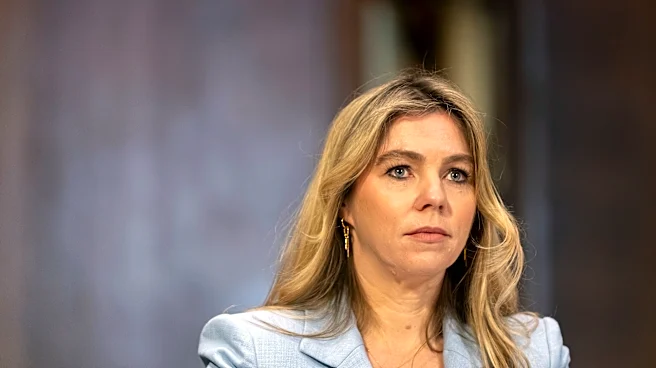
Sarah Wynn-Williams, a former director of global public policy at Meta, has filed a lawsuit against the company, claiming it attempted to silence her memoir, 'Careless People.' The lawsuit, filed in federal court in Northern California, challenges a private
arbitration order that prevents her from discussing the company or promoting her book. Wynn-Williams argues that the severance agreement she signed, which includes a non-disparagement clause, was signed under duress. Her memoir reportedly contains allegations of inappropriate behavior by Meta's CEO, Mark Zuckerberg, and other executives, as well as efforts to curry favor with Chinese officials. Meta has responded by stating that Wynn-Williams violated her agreement and that her book is filled with inaccuracies. The company is seeking $50,000 in damages for each alleged violation of the non-disparagement agreement.
Why It's Important?
This lawsuit highlights the ongoing tension between corporate entities and former employees who seek to expose internal practices. The case could have significant implications for corporate governance and the rights of former employees to speak out against their previous employers. If Wynn-Williams succeeds, it may encourage other former employees to come forward with their own accounts, potentially leading to increased scrutiny of corporate practices. The case also raises questions about the balance between contractual agreements and free speech, particularly in the context of non-disparagement clauses that may be perceived as overly restrictive.
What's Next?
The court's decision on whether to lift the arbitration order and vacate the severance agreement will be closely watched. A ruling in favor of Wynn-Williams could set a precedent for similar cases, potentially affecting how companies draft and enforce non-disparagement agreements. Meta's response to the lawsuit and any potential settlement discussions will also be of interest, as they may influence the company's public image and its handling of internal dissent.
Beyond the Headlines
The lawsuit underscores the ethical and legal challenges faced by whistleblowers in the corporate world. It raises questions about the power dynamics between large corporations and individual employees, and the extent to which companies can control narratives about their internal operations. The case may also prompt discussions about the role of arbitration in resolving disputes and whether it adequately protects the rights of individuals.