





What's Happening?
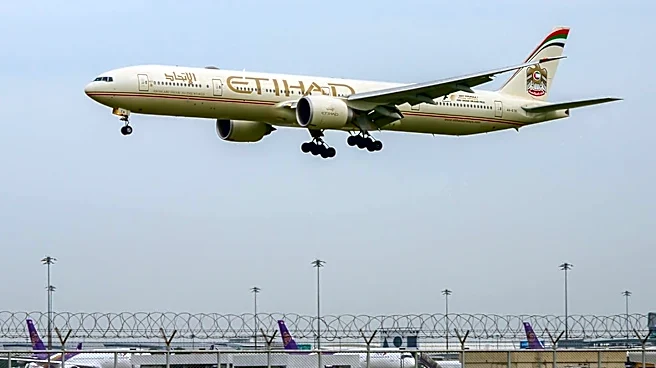
Bangkok's Suvarnabhumi Airport is facing severe cargo congestion at Thai Airways’ cargo warehouse, leading to substantial delays in both import and export shipments. This backlog is causing airlines to restrict Bangkok-bound freight, and ground handler
Bangkok Freight Services is also experiencing delays. The core issue stems from a system breakdown where the cargo clearance system, developed by Airports of Thailand and Thai Airways, is failing to accurately record the storage location and status of shipments. Consequently, large volumes of cargo remain on pallets and in containers, awaiting processing. Thai Airways has acknowledged the problem, apologizing to customers and airlines, and is implementing measures such as increasing staff and forklifts, prioritizing deliveries, and seeking temporary warehouse space from Airports of Thailand. The airline also plans to introduce an internal warehouse management system to improve cargo tracking from arrival.
Why It's Important?
This cargo congestion at a major international hub like Bangkok Suvarnabhumi Airport carries significant implications for global supply chains, particularly for the United States. Thailand is a crucial component of the electronics and AI infrastructure ecosystem, with electrical machinery and equipment being top export categories. The worldwide surge in demand for AI-related cloud storage has propelled local manufacturing, and about 22% of Thailand’s exports last year went to the United States. The delays are occurring during the peak shipping season, raising costs and disrupting production and delivery schedules for manufacturers globally who rely on imported materials and components from Thailand. Without proper shipment visibility, freight forwarders and customs brokers cannot complete payments and release procedures, further exacerbating the economic impact. The situation threatens to disrupt outbound shipments, affecting U.S. industries dependent on Thai exports.
What's Next?
Airports of Thailand is coordinating discussions among stakeholders to mitigate the disruption. The Thai Chamber of Commerce has proposed several solutions, including sorting cargo by airline, accelerating container breakdown, assigning clear storage locations, increasing manpower with private-sector support, and updating the cargo clearance system with real-time cargo-location information. Thai Airways is prioritizing shipments that arrived before October 23 and is actively working to clear the backlog. Shippers are being advised to book flights several days in advance due to the ongoing delays. The implementation of a new internal warehouse management system by Thai Airways is expected to improve tracking and efficiency in the long term, but immediate relief depends on the effectiveness of the current measures to clear the existing congestion.
Beyond the Headlines
The ongoing cargo congestion at Bangkok Suvarnabhumi Airport highlights the fragility and interconnectedness of global supply chains. While the immediate cause is a system breakdown and operational inefficiencies, the broader context includes the increasing demand for electronics and AI-related components, which places immense pressure on logistics infrastructure. This event underscores the critical need for robust and transparent cargo management systems, especially in key manufacturing and export hubs. The reliance on manual processes or outdated systems can lead to significant economic repercussions, affecting not only the immediate stakeholders like airlines and freight forwarders but also end consumers and industries worldwide. The incident also serves as a reminder of how localized operational issues can have a ripple effect, impacting international trade and economic stability.