




What's Happening?
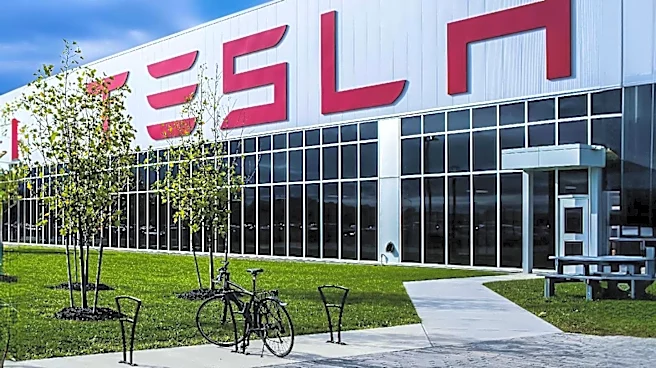
Elon Musk's foundation distributed close to $400 million in 2025, with the majority of these funds directed to another nonprofit organization also established by Musk. The foundation's total assets experienced significant growth, increasing by over $1
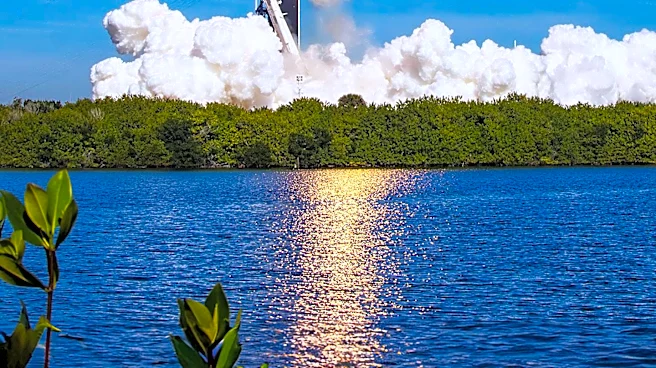
billion to reach approximately $16 billion. This substantial increase was partly fueled by a $64 million donation of Tesla shares. In related news, Musk has expressed concerns that artificial intelligence (AI) companies might encounter financial difficulties in 2027, as they await the revenue generation from costly chips. Additionally, he highlighted that SpaceX, another of his ventures, has been responsible for launching more payload mass into orbit over the past 20 years than the combined efforts of the rest of the United States since 1957.
Why It's Important?
The substantial philanthropic activities of Elon Musk's foundation, particularly the channeling of funds to his own nonprofit, underscore a growing trend among wealthy individuals to control the distribution of their charitable contributions. This approach can concentrate influence and resources within specific areas aligned with the donor's vision, potentially impacting the broader philanthropic landscape and the types of causes that receive significant funding. The foundation's rapid asset growth, bolstered by Tesla shares, also highlights the interconnectedness of Musk's business successes with his charitable endeavors. Furthermore, Musk's warning about a potential cash crunch for AI companies in 2027 points to the significant capital investment required for advanced technological development and the inherent risks involved in long-term, high-cost projects before they become profitable. This could influence investment strategies and government support for the AI sector. SpaceX's dominance in payload launches signifies a shift in space capabilities, potentially impacting national security, scientific research, and commercial space industries.
What's Next?
The continued growth and philanthropic activities of Elon Musk's foundation will likely be scrutinized for their impact on the nonprofit sector and the specific causes they support. Future financial disclosures will reveal the ongoing allocation of funds and the foundation's asset trajectory. For the AI industry, the year 2027 will be a critical juncture to observe whether Musk's prediction of a cash crunch materializes. This could lead to increased calls for government funding, new investment models, or consolidation within the AI sector as companies navigate the high costs of chip development and deployment. SpaceX's ongoing launch cadence and technological advancements will continue to shape the future of space exploration and commercial space services, potentially influencing international space policies and competition.
Beyond the Headlines
The structure of Elon Musk's philanthropic efforts, where a significant portion of donations goes to his own affiliated nonprofits, raises questions about the transparency and ultimate beneficiaries of such large-scale giving. While this model allows for direct control over the impact of donations, it can also limit the diversity of organizations receiving support and potentially concentrate power. The financial challenges anticipated for AI companies in 2027 highlight the ethical and economic considerations surrounding the rapid advancement of artificial intelligence. The immense capital required for AI development could create barriers to entry for smaller innovators and potentially lead to a concentration of AI power among a few well-funded entities. SpaceX's unparalleled launch capabilities also bring into focus the increasing privatization of space and the implications for global access to space, orbital debris, and the potential for commercial entities to shape the future of space exploration independently of traditional government agencies.