


What's Happening?
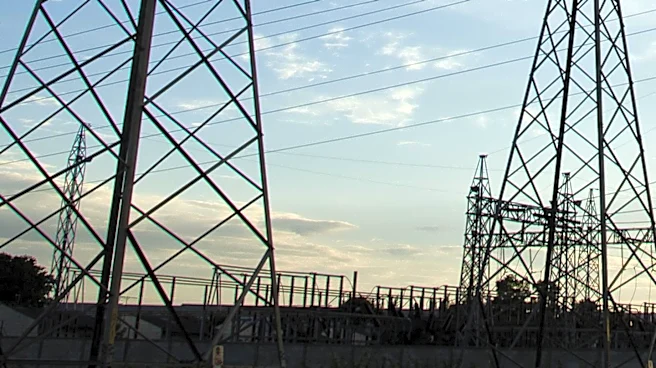
The U.S. power sector is undergoing significant transformation, characterized by a slowdown in regulatory initiatives, key environmental rules being put on hold by courts, and a period of reconsideration for multiple environmental standards affecting
generation and transmission. Concurrently, demand pressures are mounting due to the rapid expansion of data centers, increasing electrification, and broader economic growth. This confluence of factors is forcing utilities and power producers to make critical decisions regarding investments in new generation, the retirement of aging assets, and compliance planning in an unpredictable policy environment. Major gas turbine manufacturers are reporting lead times of four or more years, with interconnection queues for new plants also extending for similar durations, creating bottlenecks for developers.
Why It's Important?
This dynamic environment poses substantial challenges and opportunities for the U.S. energy industry and economy. The regulatory uncertainty creates a difficult landscape for long-term planning and investment, potentially delaying crucial infrastructure projects needed to modernize the grid and meet growing demand. The surging demand from data centers, in particular, is a significant driver, as these facilities require massive and reliable power supplies. The extended lead times for gas turbines and interconnection queues mean that traditional power generation solutions are not keeping pace with this demand. This situation could lead to higher energy costs, potential grid instability, and a shift towards alternative, faster-deployable power solutions like reciprocating engines, fuel cells, and battery storage paired with microgrids. The inability to quickly bring new generation online could also impact the competitiveness of U.S. industries reliant on affordable and abundant electricity.
What's Next?
In response to the long lead times for traditional power generation and grid connections, developers are increasingly turning to 'behind-the-meter' solutions and private grids. This involves deploying faster-to-market technologies such as reciprocating engines, fuel cells, and battery storage, often integrated with microgrids, to meet the high-availability demands of data centers and other critical loads. This trend suggests a decentralization of power generation and a greater emphasis on localized, resilient energy systems. Utilities and power producers will need to adapt their strategies to incorporate these new technologies and business models. The policy environment will likely continue to evolve as stakeholders grapple with balancing environmental goals, economic growth, and energy security. There may also be increased investment in operational expertise, as the ability to run diverse, multi-fuel power systems becomes a critical asset.
Beyond the Headlines
The shift in the U.S. power sector highlights a fundamental change in how energy infrastructure is being developed and managed. The traditional model of large, centralized power plants connected to a vast grid is being challenged by the need for speed, flexibility, and resilience. The 'smart money' is increasingly looking at acquiring operational capabilities rather than just megawatts, recognizing that the ability to efficiently run complex, mixed-generation systems is a scarce and valuable asset. This could lead to a consolidation of operational expertise and a greater focus on human capital within the energy sector. Furthermore, the intense power demands of data centers, particularly those supporting artificial intelligence, are forcing a re-evaluation of energy policy and infrastructure planning at a national level. The long-term implications include a more diversified energy mix, potentially greater energy independence for critical facilities, and a renewed focus on grid modernization to accommodate these new demands.