

What's Happening?
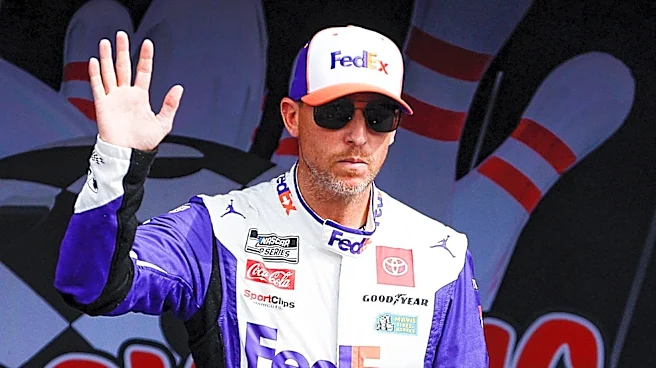
NASCAR driver Denny Hamlin has publicly accused fellow Chevrolet drivers of taking orders from team owner Rick Hendrick, particularly during the recent NASCAR Cup Series race at Talladega Superspeedway. Hamlin, speaking on his 'Actions Detrimental' podcast,
suggested that Hendrick's influence within Chevrolet's racing operations is so significant that other Chevrolet teams and drivers are compelled to support Hendrick Motorsports drivers, such as Kyle Larson. He specifically pointed to the Talladega race where Larson secured a victory, implying that support from other Chevrolet teams, including Ross Chastain, was instrumental. Hamlin stated that drivers are at the 'lowest on the totem pole' when it comes to team or manufacturer orders, and that Hendrick effectively dictates how Chevrolet's teams operate, controlling the flow of information and resources. He questioned whether other Chevrolet teams, like Richard Childress Racing (RCR), receive the same level of technical information as Hendrick Motorsports.
Why It's Important?
This accusation by Denny Hamlin highlights potential issues of competitive fairness and transparency within NASCAR's manufacturer-team relationships. If true, the claim that one team owner, Rick Hendrick, wields such extensive control over an entire manufacturer's strategy and information sharing could undermine the perception of an even playing field. This could lead to questions about the integrity of races, particularly those with championship implications, and potentially erode fan trust. For other Chevrolet teams, it suggests a hierarchical structure where their competitive interests might be secondary to Hendrick Motorsports. For Toyota and Ford teams, it could be seen as an unfair advantage for Chevrolet, potentially influencing future manufacturer alliances and team strategies. The controversy also brings into focus the role of manufacturers in dictating team orders and the extent to which drivers are free to compete independently.
What's Next?
The immediate aftermath of Hamlin's comments could involve responses from Rick Hendrick, Chevrolet, and the implicated drivers or teams, either confirming, denying, or clarifying the nature of their collaboration. NASCAR may also face pressure to investigate or issue a statement regarding the allegations of undue influence and unequal information sharing among manufacturer-affiliated teams. This situation could lead to a broader discussion within the sport about manufacturer support, team alliances, and the rules governing competitive conduct. Future races, especially those where manufacturer strategy plays a significant role, will likely be scrutinized more closely for signs of team orders or preferential treatment. The ongoing debate could also influence contract negotiations for drivers and teams, as the perceived level of manufacturer support becomes a more critical factor.
Beyond the Headlines
Beyond the immediate competitive implications, Hamlin's remarks touch upon the deeper power dynamics within professional motorsports. The idea of a 'master' controlling an entire manufacturer's program raises questions about the balance of power between team owners, manufacturers, and individual drivers. It suggests a corporate structure where commercial interests and strategic alliances might supersede individual team aspirations or the spirit of pure competition. This could have long-term effects on driver development, team independence, and the overall competitive landscape of NASCAR. The controversy also highlights the inherent tension between individual achievement and collective manufacturer success in a sport where both are highly valued. It prompts a re-evaluation of how transparent manufacturers should be about their internal support structures and how NASCAR can ensure equitable competition across all its participants.