






What's Happening?
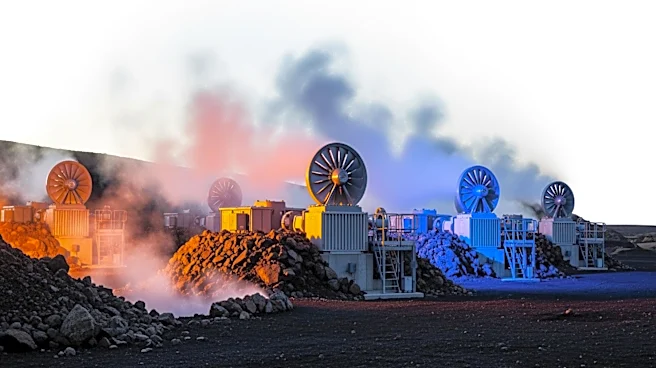
US-based start-up Syntholene has constructed a geothermal demonstration facility in Husavik, Iceland, to produce green hydrogen for synthetic sustainable aviation fuel (eSAF). This facility utilizes geothermal heat and high-temperature electrolysis, significantly
reducing the cost of green hydrogen, which is a major component in eSAF production. The company aims to cut eSAF costs by 70%, addressing a critical bottleneck in the aviation industry's shift towards sustainable fuels. Syntholene's CEO, Dan Sutton, highlights that the cost of green hydrogen can account for 70% of eSAF production costs. The facility's success could dramatically lower these expenses, making eSAF more accessible. Testing and data collection at the facility are set to begin soon, with initial results expected in the fourth quarter of this year.
Why It's Important?
The development of cost-effective eSAF is crucial for the aviation industry's goal of achieving net zero carbon emissions by 2050. The high cost and limited availability of sustainable aviation fuels have been significant barriers. Syntholene's initiative could transform the market by making eSAF more affordable, thus encouraging wider adoption. This breakthrough is particularly relevant as the International Air Transport Association (IATA) has expressed concerns over the industry's ability to meet its sustainability targets. By reducing eSAF costs, airlines could potentially pass on minimal price increases to consumers, making sustainable travel more viable. Furthermore, Syntholene's approach could serve as a model for other regions with geothermal resources, expanding the global capacity for sustainable fuel production.
What's Next?
Syntholene plans to publish initial efficiency results from its Iceland facility later this year. The company is also negotiating offtake agreements with airlines, including a tentative deal with Icelandair for 20 kilotonnes of eSAF annually over ten years. These agreements are crucial for scaling up production to meet future demand. The European Union's ReFuel EU mandate, which requires increasing percentages of SAF and eSAF in jet fuel, underscores the urgency of these developments. If successful, Syntholene's model could be replicated in other geothermal-rich regions, potentially accelerating the aviation industry's transition to sustainable fuels.
Beyond the Headlines
Syntholene's project highlights the potential of geothermal energy as a sustainable resource for hydrogen production. This approach not only addresses the cost challenges of eSAF but also aligns with broader clean energy initiatives. The success of such projects could influence policy decisions, encouraging subsidies and support for similar ventures. Additionally, the project's implications extend beyond aviation, as the technology could be adapted for other industries reliant on hydrogen. The initiative also raises questions about the role of government and industry collaboration in achieving sustainability goals, emphasizing the need for supportive policies and incentives.