
What's Happening?
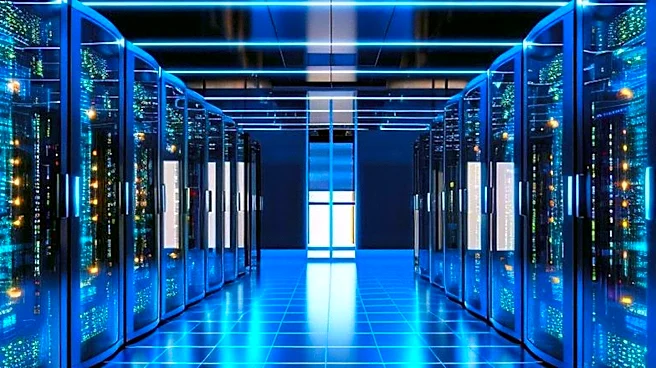
Vertiv Holdings Co., a global leader in critical digital infrastructure, is focusing on the challenges of maintaining cooling in data centers, particularly concerning power continuity for Coolant Distribution Unit (CDU) pumps. The company's white paper
highlights that brief power disturbances can significantly impact CDU pumps, which often use variable frequency drives (VFDs). These VFDs can trip during voltage dips or interruptions, leading to extended periods without adequate coolant flow. This issue is exacerbated by direct-to-chip liquid cooling systems, where the thermal buffer is greatly reduced compared to traditional air-cooled environments, causing chip temperatures to rise rapidly if coolant flow is interrupted. Vertiv's analysis explores various power continuity approaches, including generator-backed utility power, dual utility feeds, connection to the IT UPS, and dedicated cooling UPS systems, to mitigate these risks.
Why It's Important?
The reliability of data center cooling is paramount for the U.S. digital infrastructure, impacting everything from cloud services to financial transactions. Interruptions in cooling can lead to critical system failures, data loss, and significant financial repercussions for businesses and the economy. Vertiv's insights are crucial for data center operators and infrastructure planners in the U.S. as they navigate the complexities of power management and thermal stability. The shift towards direct-to-chip liquid cooling, while efficient, introduces new vulnerabilities that demand sophisticated power continuity solutions. Ensuring uninterrupted cooling directly supports the continuous operation of essential digital services, safeguarding economic stability and national security interests tied to robust data infrastructure.
What's Next?
Data center operators and infrastructure designers are expected to increasingly evaluate and implement advanced power continuity strategies for CDU pumps, as outlined by Vertiv. This will likely involve a more integrated approach to electrical architecture, considering factors such as VFD sensitivity, transfer times, pump restart characteristics, and harmonic distortion. The industry will need to move beyond treating cooling backup as an isolated decision, instead integrating it into the complete critical infrastructure design. This shift will drive demand for more resilient power solutions and potentially influence future data center design standards and best practices across the U.S. and globally.
Beyond the Headlines
The increasing reliance on critical digital infrastructure, coupled with the adoption of advanced cooling technologies like direct-to-chip liquid cooling, underscores a broader trend towards higher density computing and greater energy demands. This development raises ethical and environmental considerations regarding energy consumption and the resilience of digital services. The need for robust power continuity solutions for cooling systems highlights the intricate interdependencies within modern technological ecosystems. As data centers become more central to daily life, the implications of even brief power disruptions extend beyond immediate operational costs, touching upon societal functions, privacy, and the overall stability of the digital economy.