




What's Happening?
Ford Motor Company is recruiting a Director, Hardware Engineering & Integration for its Advanced Technology Program (ATP). This role, reporting to the ATP vertical leader for Forge, Print, and Global Operations, is central to Ford's strategy of transforming
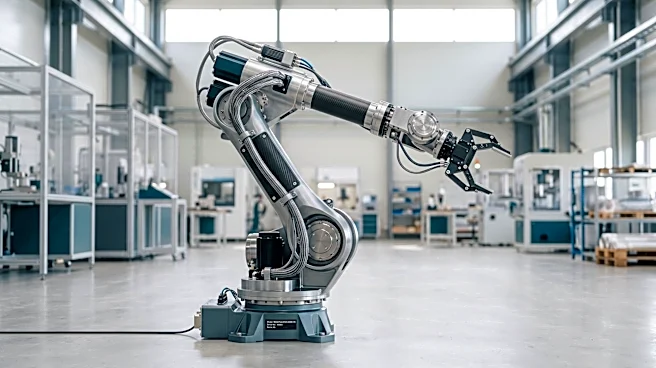
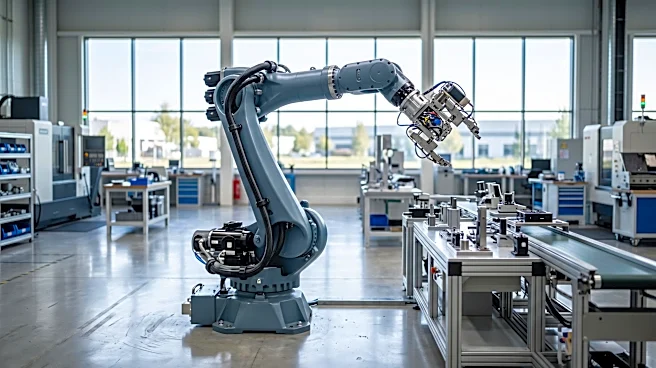
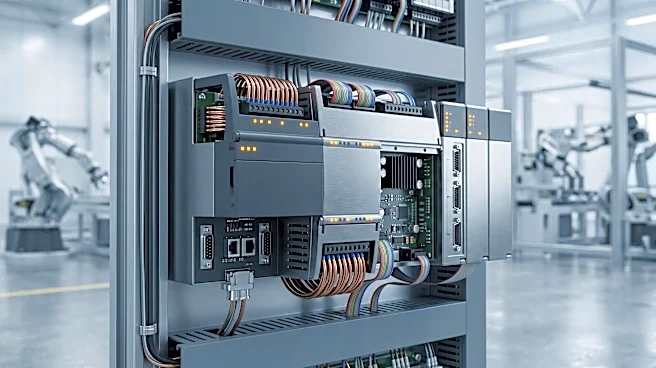
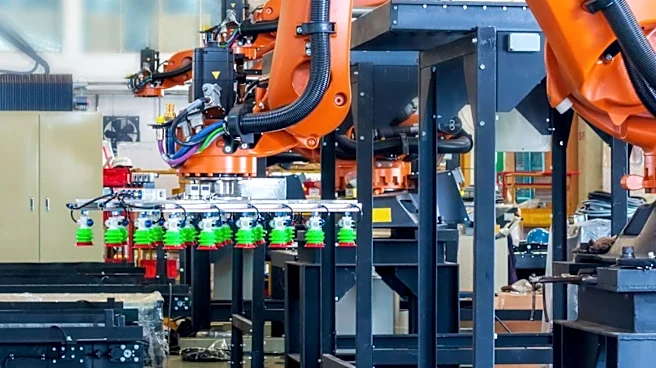
manufacturing through robotics, additive manufacturing, AI vision, and digital platforms. The director will be responsible for owning the hardware designed by ATP and the methods for integrating and commissioning it across Ford's plants. This includes leading the design and validation of end effectors, grippers, and tooling for high-volume robotic applications, as well as managing edge compute hardware and enclosures. The position also involves building and maintaining RoboGym test cells for qualifying third-party robots and establishing cable and wire-harness standards.
Why It's Important?
This strategic hire underscores Ford's commitment to in-house automation and robotics capabilities, aiming to reduce reliance on external integrators and drive down deployment costs. By owning the 'bookends' of its robotics strategy—the top-layer plant ontology, safety, testing, data rights, and the tool end (end effectors, tooling)—Ford seeks to standardize and streamline its manufacturing processes globally. This initiative is critical for scaling electric vehicle production and integrating advanced technologies into its 56 plants worldwide. The role's focus on standardizing integration and commissioning methods will enhance efficiency, repeatability, and safety across Ford's operations, ultimately impacting the company's competitiveness and production output in the evolving automotive industry.
What's Next?
The new Director, Hardware Engineering & Integration, ATP, will be tasked with implementing a unified commissioning method across ATP, encompassing risk assessment, virtual commissioning, and factory/site acceptance testing. A key objective is to convert work currently handled by outside integrators into in-house Ford capability, starting with high-volume applications. This will involve leading and growing a multidisciplinary team of engineers and setting device readiness standards for suppliers of robots, AMRs, printers, and vision systems. The role will also ensure that ATP hardware designs are ready for manufacture by Ford's prototype and manufacturing subsidiary, TDM, facilitating scalable production and further integrating advanced robotics into Ford's global manufacturing footprint.
Beyond the Headlines
Ford's investment in this leadership role signifies a broader industry trend towards vertical integration and proprietary technology development in manufacturing. By bringing hardware engineering and integration in-house, Ford aims to gain greater control over its production systems, enhance intellectual property, and accelerate innovation cycles. This shift could lead to more customized and efficient automation solutions tailored to Ford's specific needs, potentially setting new benchmarks for operational excellence in the automotive sector. Furthermore, the emphasis on functional safety and rigorous testing through facilities like RoboGym highlights a commitment to not only efficiency but also the safety and reliability of advanced manufacturing technologies, influencing industry best practices.