



What's Happening?
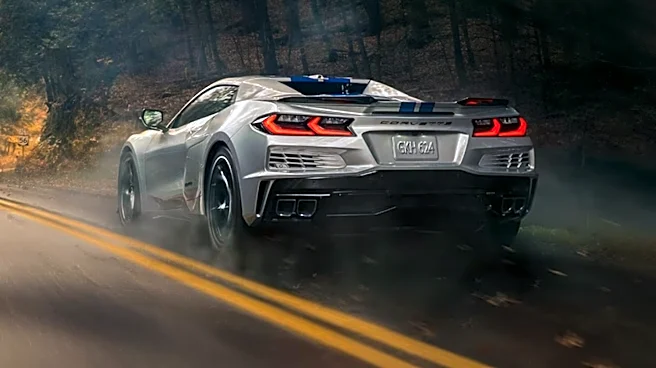
Chevrolet has reportedly scrapped its plans to expand the Corvette lineup to include an SUV and a fully electric model. This decision comes amidst a period of softer demand for electric vehicles. While General Motors never officially confirmed these variants
were in development, rumors of a 'Corvette family' had been circulating widely, suggesting a diversification beyond the traditional sports car. The report indicates that the automaker has not issued a formal statement on the cancellation, but the quietness surrounding these projects, coupled with current EV market trends, points to a change in strategy. The Corvette community, known for its strong traditionalist views, is largely seen as relieved by this development, preferring the brand to maintain its focus on high-performance sports cars.
Why It's Important?
This reported shift in strategy by Chevrolet reflects broader challenges and evolving dynamics within the U.S. automotive market, particularly concerning electric vehicle adoption. The decision to halt a Corvette SUV and EV suggests that even iconic brands are re-evaluating their electrification timelines and product diversification strategies in response to market realities. For General Motors, it indicates a potential recalibration of its EV investment and production plans, possibly prioritizing segments with stronger immediate demand or focusing on more established EV models. This move could also be seen as a win for traditional sports car enthusiasts who prefer the Corvette to remain a dedicated performance vehicle, rather than expanding into SUV or mass-market EV segments, which could dilute its brand identity. It highlights the tension between legacy brand heritage and the push towards electrification.
What's Next?
With the reported cancellation of the Corvette SUV and EV, Chevrolet is expected to continue focusing on its core Corvette sports car lineup, including upcoming variants like the C9. The company will likely provide more insights into the future of the Corvette in the next year or two, emphasizing its status as a flagship American sports car. This decision might also lead General Motors to reallocate resources to other EV projects or to hybrid technologies, which have shown more immediate popularity in the U.S. market than full EVs. The broader automotive industry will be watching how other manufacturers balance their electrification goals with current market demand and brand identity, especially for their high-performance or iconic models.
Beyond the Headlines
The reported decision by Chevrolet to not proceed with a Corvette SUV or EV touches upon several deeper implications. It underscores the significant influence of brand identity and loyal customer bases in the automotive industry. For many, the Corvette represents a specific type of American performance car, and expanding it into an SUV or a purely electric model was perceived as a departure from its essence. This situation highlights the delicate balance automakers must strike between innovation, market trends, and preserving brand heritage. It also suggests that the transition to EVs might not be a linear or universally accepted path, especially for segments deeply rooted in internal combustion engine performance. The 'softer EV demand' mentioned in the report could be a temporary fluctuation or a sign that consumer preferences are more complex than initially anticipated, requiring more nuanced product strategies from manufacturers.