






What's Happening?
Elmos Semiconductor SE has been awarded the 'European Innovator 2026' for its Quantum Random Number Generator (QRNG). This marks the second time this year that Elmos' quantum technology has received high-profile recognition from expert panels. The award ceremony
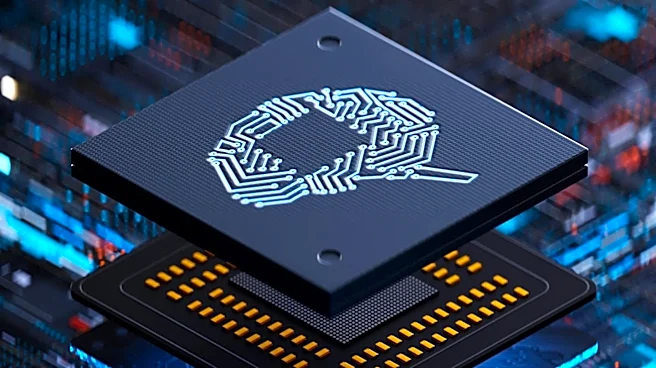
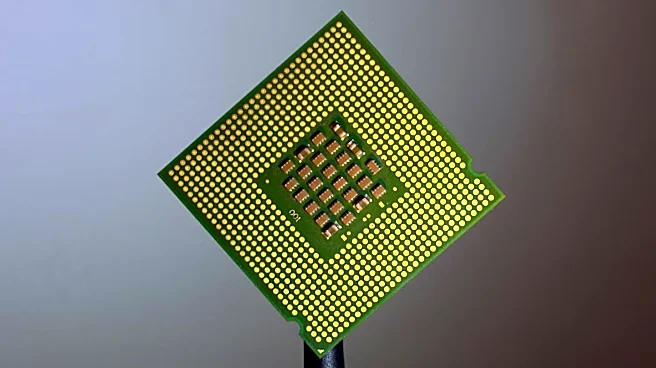
took place at the 'Innovator of the Year' gala in Bonn, acknowledging innovations with international impact that serve European markets. The Elmos QRNG leverages quantum physics to produce truly random numbers, which are crucial for cryptographic applications. This technology aims to enhance the security of data and digital communications. The QRNG is implemented on a single 2x2-mm chip, but can also be integrated as intellectual property (IP) into various CMOS platforms. This design makes it suitable for applications demanding high security, minimal space, and low power consumption, such as those in the automotive industry, communications, and the Internet of Things (IoT). Dr. Jan Dienstuhl, Chief Sales Officer at Elmos Semiconductor SE, stated that these awards confirm the innovative potential of their quantum-based technology and acknowledge their development team's work, highlighting the QRNG's future contribution to protecting digital systems.
Why It's Important?
The recognition of Elmos Semiconductor SE's QRNG as a leading innovation underscores the growing importance of quantum technology in cybersecurity. The ability to generate truly random numbers is fundamental to robust encryption, as traditional pseudo-random number generators can be vulnerable to sophisticated attacks. Quantum-based encryption offers a higher level of security, which is increasingly vital in an era of escalating cyber threats and the advent of quantum computing, which could potentially break current encryption standards. This development is particularly significant for industries that handle sensitive data, such as finance, defense, and critical infrastructure, as it provides a more secure foundation for their digital communications and data protection. The compact size and low power consumption of Elmos' QRNG make it practical for integration into a wide range of devices, from embedded systems in automobiles to IoT devices, thereby broadening the scope of secure digital environments. This innovation could set new benchmarks for cryptographic security, influencing future standards and practices in digital security across various sectors.
What's Next?
The continued recognition and development of quantum random number generators like Elmos' QRNG suggest a future where quantum-based security becomes a more integral part of digital infrastructure. As the technology matures and becomes more widely adopted, it is likely to influence the development of new security protocols and standards. We can anticipate increased integration of such quantum security solutions into commercial products, particularly in sectors with stringent security requirements. Further research and development will likely focus on enhancing the efficiency, scalability, and cost-effectiveness of QRNGs, making them more accessible for broader applications. Additionally, the success of Elmos' QRNG may spur further investment and innovation in quantum cryptography, leading to a more secure digital ecosystem globally. The support from governmental initiatives, such as the IPCEI MECT initiative mentioned by Elmos, indicates a concerted effort to foster advancements in this critical technological domain.
Beyond the Headlines
The advancement of quantum random number generators like Elmos' QRNG represents a significant step in the ongoing arms race between cybersecurity and cyber threats. Beyond its immediate application in encryption, the widespread adoption of true random number generation could have profound implications for the trustworthiness of digital systems. It addresses a fundamental vulnerability in classical computing, where 'randomness' is often algorithmically generated and thus, in theory, predictable. This shift towards quantum-derived randomness could enhance trust in digital transactions, secure communications, and even scientific simulations that rely on unpredictable inputs. Ethically, it raises questions about the future of privacy and surveillance, as truly unbreakable encryption could empower individuals and organizations while simultaneously posing challenges for law enforcement and national security agencies. Legally, the development of quantum-safe cryptography will necessitate updates to regulatory frameworks and international standards to ensure interoperability and widespread adoption, shaping the future of digital sovereignty and global cybersecurity policies.