



What's Happening?
7th Street Burger, a New York City-based burger chain, has experienced rapid expansion since its founding in 2021 by Kevin Rezvani and college friends. The chain, which began on 7th Street in New York City's East Village, quickly opened a second location
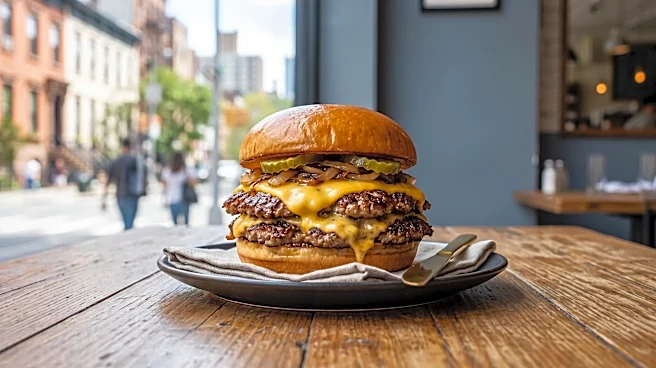
less than a year later. The company's success is attributed to its focus on simplicity and high-quality smashburgers. The menu is streamlined, offering only a cheeseburger, double cheeseburger, Impossible burger, and french fries, along with a few beverage options. These burgers are served with American cheese, grilled onions, a secret house sauce, and pickles. The chain sources its beef from Schweid & Sons, a supplier known for its flavorful and additive-free meat, which contributes to the perceived high quality of their burgers.
Why It's Important?
The rapid growth of 7th Street Burger highlights a significant trend in the U.S. fast-casual dining market: consumer demand for simple, high-quality food offerings. In an industry often characterized by extensive menus and complex preparations, 7th Street Burger's minimalist approach demonstrates that focusing on a few well-executed items can lead to substantial success. This strategy could influence other emerging food businesses to prioritize quality ingredients and a focused menu over broad variety. The chain's reliance on a reputable beef supplier like Schweid & Sons also underscores the increasing importance of ingredient transparency and quality sourcing for consumers, potentially driving other restaurants to highlight their supply chains as a competitive advantage. This success story provides a case study for entrepreneurs in the food service sector on effective market entry and expansion.
What's Next?
Given its rapid expansion and positive customer reception, 7th Street Burger is likely to continue its growth trajectory, potentially opening more locations within New York City and possibly exploring expansion into other urban markets. The chain's model of simplicity and quality could inspire similar ventures, leading to increased competition in the smashburger segment of the fast-casual market. Future developments might include further refinement of their core offerings or strategic partnerships to enhance their supply chain or operational efficiency. The continued success of 7th Street Burger will also likely reinforce the market's appreciation for high-quality, fresh ingredients, potentially influencing broader industry standards for sourcing and preparation in the fast-food sector.
Beyond the Headlines
The success of 7th Street Burger reflects a broader cultural shift towards valuing authenticity and quality in food, even within the fast-food context. This trend challenges the traditional perception of fast food as solely about speed and low cost, suggesting a growing consumer willingness to pay a premium for better ingredients and a more focused culinary experience. Ethically, the emphasis on high-quality beef from suppliers like Schweid & Sons could encourage more sustainable and responsible sourcing practices across the industry. This movement away from highly processed, mass-produced food towards simpler, ingredient-focused options could have long-term implications for public health and the agricultural sector, potentially driving demand for higher-grade, locally sourced, or ethically produced ingredients.