




What's Happening?
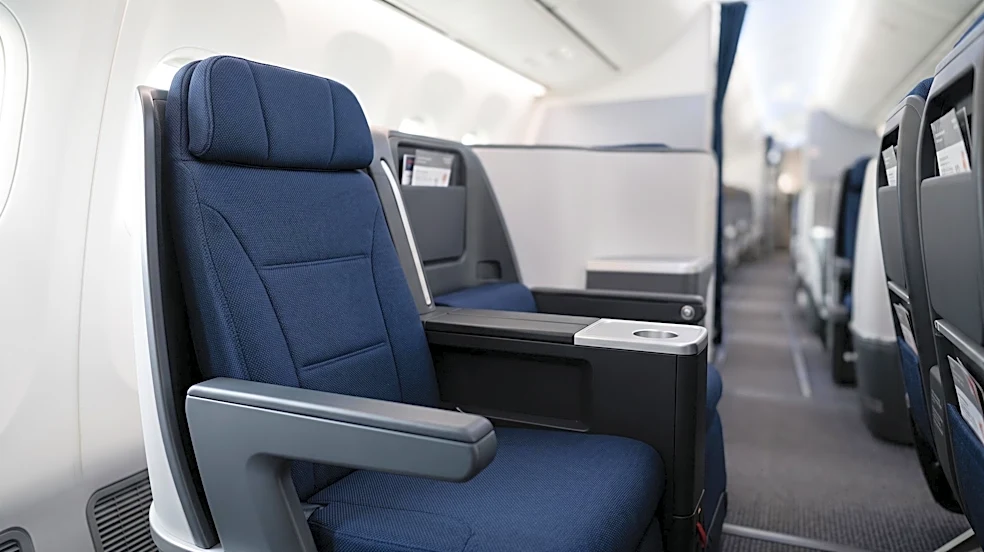
United Airlines CEO Scott Kirby is advocating for a pricing model where passengers pay a premium to avoid middle seats. This position aligns with United's strategy of repositioning its cabin products and pricing structure. The airline has introduced a new
economy offering that features a deliberately vacant middle seat, which is covered by a table and cupholders, providing shared surface space for aisle and window seat passengers. Kirby's logic inverts the traditional view of seat selection fees; instead of window and aisle seats being upgrades, the middle seat is presented as the baseline, and opting out of it incurs an additional cost. This development comes as United has also increased checked bag fees by $10, its first such increase in two years, and reported rising airfares due to higher jet fuel costs.
Why It's Important?
This pricing strategy by United Airlines, championed by CEO Scott Kirby, signifies a significant shift in how airlines monetize cabin space and passenger comfort. By framing the middle seat as the standard and charging for its avoidance, United is attempting to maximize revenue from every available seat, even those that remain empty. This approach could become a new industry standard, influencing other airlines to adopt similar models. For passengers, it means potentially higher travel costs for what was once considered a basic amenity – a non-middle seat. It also highlights the increasing segmentation of airline services, where comfort and convenience are unbundled and offered at additional costs. The move reflects the airline's need to cover rising operating costs, such as jet fuel, while also capitalizing on brand loyalty, as Kirby noted that travelers continue to book despite higher prices.
What's Next?
United Airlines will likely continue to roll out and refine this new economy seat product and pricing structure. Other airlines will closely observe the market's reaction and United's financial performance to determine if they should implement similar strategies. Passengers can expect to see more differentiated pricing for various seating options, potentially leading to a more complex booking process. The airline industry may also face increased scrutiny from consumer advocacy groups regarding the transparency and fairness of these new fees. For airline crews, the fixed table structure in the middle position will necessitate adjustments in service procedures, emergency egress briefings, and passenger boarding dynamics, requiring new training and operational protocols.
Beyond the Headlines
The strategy of charging a premium to avoid middle seats reflects a broader trend in the service industry towards hyper-segmentation and personalized pricing. It underscores how companies are leveraging data and behavioral economics to identify and monetize every perceived value point for consumers. This approach can lead to a more efficient allocation of resources for the airline but may also exacerbate feelings of being 'nickel-and-dimed' among travelers. Ethically, it raises questions about what constitutes a basic service versus a premium amenity in air travel. The psychological impact on passengers, who might feel compelled to pay more to avoid a less desirable experience, could also be significant. This move could further entrench the idea that comfort is a luxury, not a standard, in economy air travel, potentially widening the gap between premium and budget travel experiences.