









What's Happening?
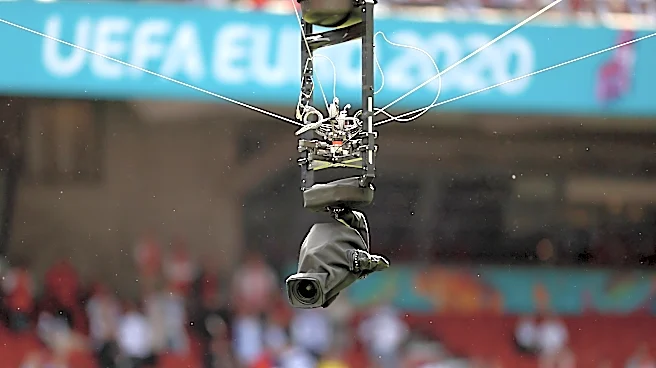
During the World Cup quarterfinal match between England and Norway, a controversy arose when it was alleged that the ball hit an overhead wire during first-half stoppage time. This incident was pivotal as it led to England gaining possession and subsequently
scoring a decisive goal. FIFA, however, has stated that there is 'no evidence' of the ball hitting any foreign object. According to FIFA, the sensor in the Connected Ball did not show any peak in the 'heartbeat of the ball' that would indicate contact with the wire. This statement comes despite visual evidence suggesting the ball moved abruptly. The rules dictate that play should be stopped and resumed with a drop ball if such an incident is noticed, but since it was not observed during the game, play continued.
Why It's Important?
The incident highlights the challenges of officiating in high-stakes sports events and the reliance on technology to make critical decisions. FIFA's statement underscores the importance of technological aids in ensuring fair play, yet it also raises questions about the reliability and interpretation of such data. The outcome of this match could have significant implications for the teams involved, particularly in a tournament setting where every goal can alter the course of the competition. For England, the goal secured their advancement, while Norway may feel aggrieved by the decision. This situation also reflects broader issues in sports regarding the balance between human judgment and technological intervention.