



What's Happening?
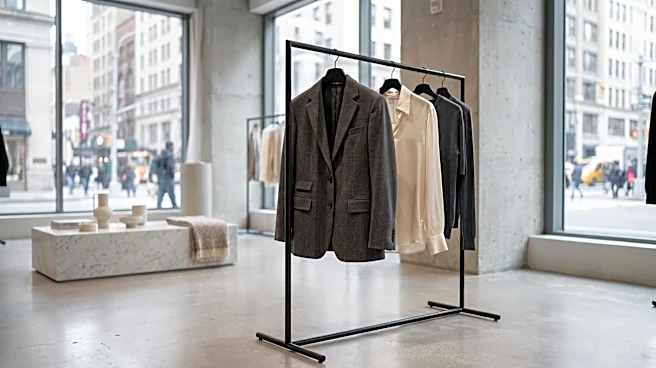
J.Crew has introduced 'Style Advisor,' an AI-powered stylist designed to offer personalized fashion recommendations to customers. This move places J.Crew alongside other retailers like Ralph Lauren and Stitch Fix, which have also adopted AI stylists.
The Style Advisor system is built upon thousands of outfit pairings derived from J.Crew's own photoshoots. According to CEO Libby Wadle, the initiative aims to shift the customer experience beyond individual product searches towards a more connected and inspiration-led approach. The AI stylist is designed to become more personalized over time, learning from customer questions and past purchases. The company acknowledges the challenge of initial personalization before a customer has provided significant input, indicating that the system will continuously adapt to individual tastes and preferences.
Why It's Important?
The adoption of AI stylists by major U.S. retailers like J.Crew signifies a growing trend in the retail apparel and fashion industry towards hyper-personalization. This shift is crucial for businesses seeking to enhance customer engagement and drive sales in a competitive market. By providing tailored outfit suggestions, companies can improve the shopping experience, reduce decision fatigue for consumers, and potentially increase average order values. For consumers, AI stylists offer convenience and access to personalized fashion advice, helping them discover new styles and understand how to integrate new purchases with their existing wardrobes. This technology also allows retailers to leverage their extensive product catalogs more effectively, moving beyond simple product listings to curated, inspirational content. The success of these AI initiatives could set new standards for customer service and personalization in the U.S. retail sector, influencing how other brands approach their digital strategies.
What's Next?
The immediate next step for J.Crew's Style Advisor will be to refine its personalization capabilities as it gathers more user data. The system's ability to learn from customer interactions and purchase history will be key to its long-term success. Other retailers are likely to observe the performance of these AI stylists, potentially leading to wider adoption of similar technologies across the U.S. fashion industry. The focus will be on how effectively these AI tools can translate browsing behavior and initial inputs into accurate and appealing recommendations, especially for first-time users. The evolution of AI stylists may also involve deeper integration with other aspects of the shopping experience, such as virtual try-ons or inventory management, to create a seamless and highly customized journey for the customer. Continued investment in AI and machine learning will be necessary to keep these systems competitive and relevant.
Beyond the Headlines
The rise of AI stylists like J.Crew's Style Advisor points to a broader transformation in consumer behavior and the retail landscape. As AI becomes more sophisticated, it blurs the lines between traditional human styling services and automated recommendations. This raises questions about the future of human stylists and personal shoppers, though AI is more likely to augment rather than fully replace these roles, handling routine tasks and providing data-driven insights. Furthermore, the reliance on AI for fashion advice could influence aesthetic trends and consumer preferences on a larger scale, as algorithms learn and propagate certain styles. Ethical considerations around data privacy and the potential for algorithmic bias in recommendations will also become increasingly important as these systems become more integrated into daily shopping experiences. The ability of AI to understand and cater to diverse tastes will be critical for its widespread acceptance and impact.