


What's Happening?
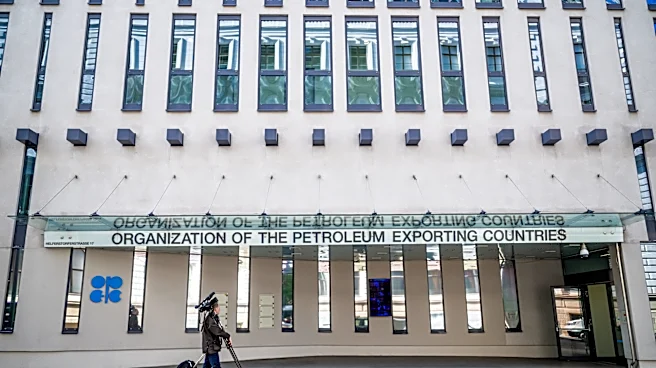
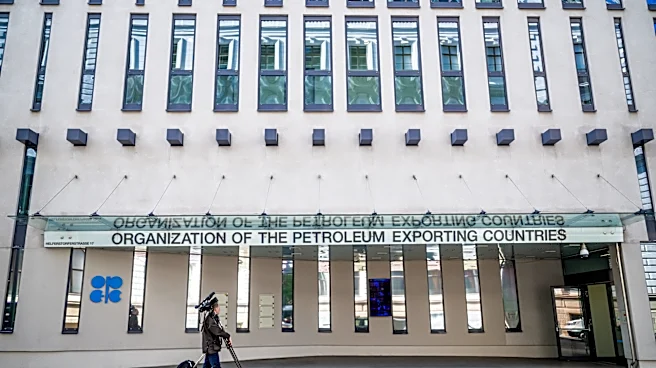
OPEC+ is scheduled to meet on November 29 to establish oil production quotas for 2027. This meeting will proceed without the participation of the UAE. Recent data from OPEC's November report indicates significant shifts in crude oil production among its
members. In Q3 2026, 12 producers collectively yielded 24.36 million barrels per day (b/d), a decrease of 3.58 million b/d compared to the previous year. Saudi Arabia, Iraq, Kuwait, and Iran experienced substantial declines, accounting for a combined loss of 4.48 million b/d. Saudi Arabia's output fell to 7.53 million b/d, its lowest third-quarter figure in the series, while Iran's production dropped by 33% to 2.17 million b/d. Conversely, the UAE increased its production by 18% to 3.84 million b/d, surpassing Iraq's output for the first time in five years. Venezuela also saw a 20% increase in production year-over-year, reaching 0.9 million b/d.
Why It's Important?
The upcoming OPEC+ meeting and the observed production shifts carry significant implications for global oil markets and, consequently, for the U.S. economy. Changes in OPEC+ quotas directly influence global oil supply, which in turn affects crude oil prices. Higher prices can lead to increased gasoline costs for U.S. consumers and higher operational expenses for industries reliant on oil, potentially contributing to inflation. Conversely, lower prices could offer relief to consumers and businesses. The UAE's increased production and its absence from the quota-setting meeting suggest a potential divergence in strategy among major oil producers, which could introduce volatility into the market. For the U.S., a major oil consumer and producer, these dynamics impact energy security, trade balances, and domestic energy policy decisions. The ability of non-Gulf producers like Venezuela and Nigeria to increase output, even modestly, could also subtly alter the geopolitical landscape of oil supply.
What's Next?
The OPEC+ meeting on November 29 will be crucial in determining the oil production landscape for 2027. The outcome of this meeting, particularly the new quotas, will likely influence global oil prices and market stability in the coming year. Without the UAE's participation, the remaining members will need to navigate potential disagreements on production levels, especially given the recent output increases from some non-Gulf producers. Market analysts will closely monitor the decisions made, as they will provide insights into the group's strategy for balancing supply and demand. The U.S. government and energy companies will be watching for any shifts that could impact domestic energy policy, strategic petroleum reserves, and investment decisions in the oil and gas sector.
Beyond the Headlines
The evolving dynamics within OPEC+ and the individual production strategies of member states highlight a broader trend towards diversification and national economic interests. The UAE's increased focus on non-oil activities, which constituted 79.2% of its real GDP in the first half of 2026, suggests a long-term strategy to reduce reliance on oil revenues. This diversification could lead to more independent oil production decisions, potentially challenging the traditional cohesion of OPEC+. For the U.S., this fragmentation could mean a less predictable global oil market, requiring more agile energy policies and a continued focus on domestic energy production and renewable alternatives to mitigate external shocks. The shift also underscores the complex interplay between economic development, energy policy, and international relations in the global energy landscape.