




What's Happening?
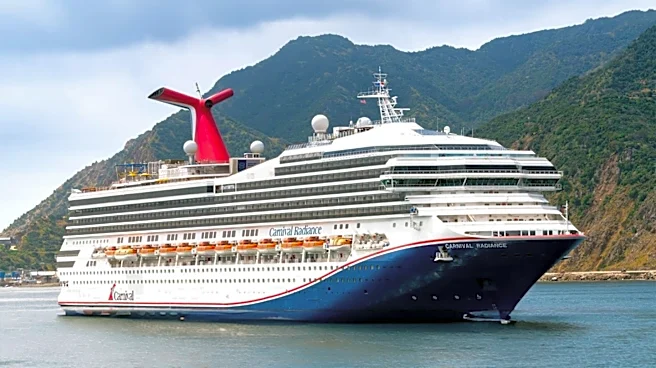
Carnival Corporation Ltd. has significantly reduced its fuel consumption, achieving a 26% decrease in fuel consumption per available lower berth day (ALBD) since 2019, including a 13% reduction over the past three years. In the third quarter of 2026,
fuel consumption declined by nearly 4% year-over-year, following a more than 5% reduction in the prior-year quarter. This cumulative reduction in consumption has resulted in savings of nearly $750 million at September guidance fuel prices. These operational improvements and increased fuel efficiency are helping the company to limit the impact of rising fuel prices, which continue to be a significant variable cost for the cruise industry, exacerbated by geopolitical uncertainties and disruptions in the Middle East.
Why It's Important?
Carnival's proactive strategy to reduce fuel consumption is crucial for its financial stability and environmental sustainability in the face of volatile energy markets. By prioritizing efficiency over short-term hedging, the company is building a more resilient business model less susceptible to external price shocks. The substantial cost savings of $750 million directly contribute to profitability and allow Carnival to better manage its operating expenses. This approach also demonstrates a commitment to reducing its environmental footprint, aligning with growing consumer and regulatory demands for more sustainable travel options. The success of this strategy could set a precedent for other energy-intensive industries, highlighting the long-term benefits of investing in technology and operational improvements for both economic and ecological reasons.
What's Next?
Carnival plans to continue its focus on efficiency gains through investments in technology, itinerary optimization, and further operational improvements. The company views fuel hedging as a short-term measure and will instead concentrate on long-term solutions to manage energy costs and reduce its exposure to price volatility. Despite the positive impact of reduced fuel consumption, higher fuel prices remain an earnings headwind. However, Carnival's operational improvements have allowed it to offset the impact of increased fuel prices, leading to a raised full-year 2026 adjusted EPS guidance to $2.24. The company's ongoing efforts in fuel efficiency will be critical to maintaining profitability and navigating future energy market fluctuations.
Beyond the Headlines
Carnival's emphasis on fuel efficiency reflects a broader trend in the transportation sector towards decarbonization and operational resilience. This shift is not merely about cost savings but also about adapting to a future where fossil fuel dependency is both economically risky and environmentally unsustainable. The cruise industry, often criticized for its environmental impact, can leverage such initiatives to improve its public image and attract a new generation of environmentally conscious travelers. This strategy also highlights the potential for innovation within established industries to address global challenges. The long-term implications include a potential transformation of cruise ship design, propulsion systems, and operational logistics, moving towards a more sustainable and efficient maritime future.