




What's Happening?
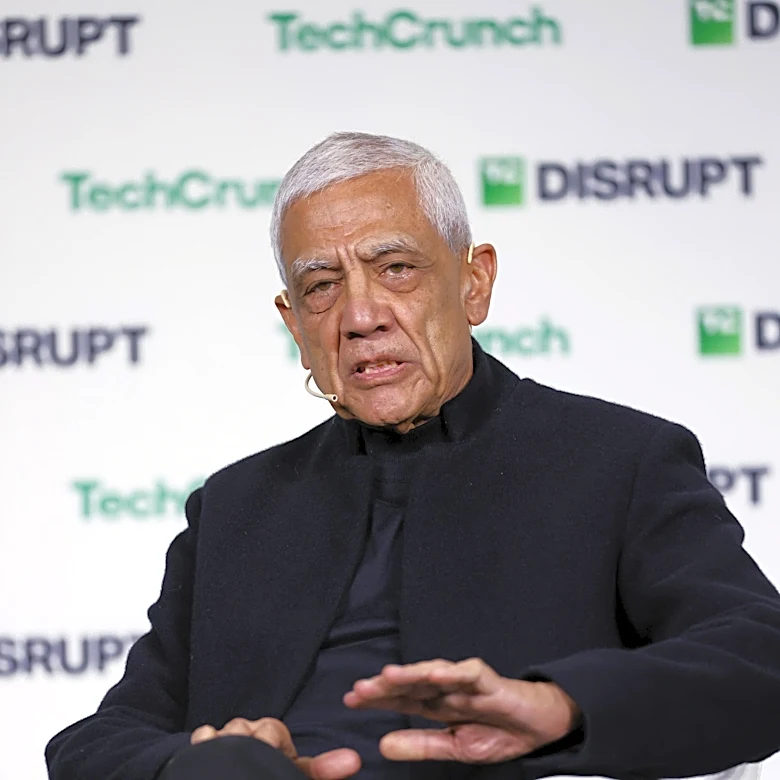
NVIDIA Vice President Rev Lebaredian, speaking at the Digitec 2026 conference in Yerevan, emphasized the critical role of open AI models in enabling smaller countries to maintain control over their technological development. Lebaredian highlighted that
while advanced closed commercial AI models exist, they limit the ability of individual companies and nations to influence their evolution. He argued that an open ecosystem provides the necessary foundation for countries to build their own AI solutions, tailored to their unique languages, cultures, and operational practices. Lebaredian outlined a five-layer AI industry structure, from energy and semiconductors to infrastructure, AI models, and applications, stressing that the application layer is crucial for economic value. He noted that Armenia, with its strong chip design community and existing infrastructure companies, is well-positioned to participate in this ecosystem. NVIDIA is actively promoting open technologies by offering models, software, data, and tools, such as Cosmos for physical AI, Groot for robotics, and AlphaMaya for autonomous driving, to facilitate this independent development.
Why It's Important?
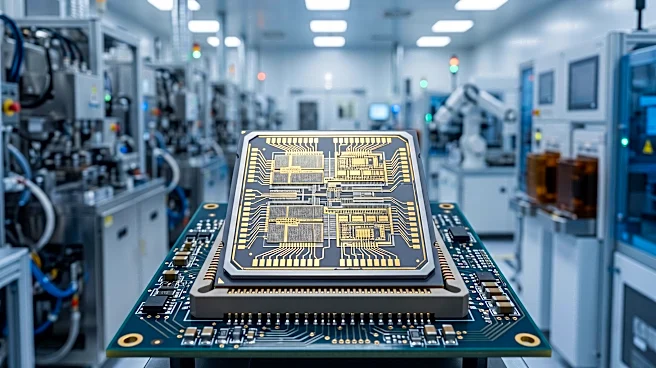
The discussion around open AI models is significant for the U.S. and global technology landscape as it addresses the balance between innovation driven by large corporations and the need for technological sovereignty among smaller nations. For U.S. tech companies like NVIDIA, promoting open standards can foster broader adoption of their foundational technologies, creating a larger market for their hardware and software. However, it also introduces potential competition from localized AI solutions. The emphasis on 'Physical AI'—the application of AI in real-world sectors like industry, agriculture, and healthcare—suggests a massive expansion of the AI market beyond its current digital focus, potentially transforming 95% of the global economy. This shift could lead to new investment opportunities and challenges for U.S. businesses in these traditional sectors, requiring adaptation and integration of advanced AI capabilities. The global demand for AI infrastructure, currently outpacing chip production, underscores the strategic importance of semiconductor manufacturing, an area where the U.S. is actively seeking to bolster its domestic capabilities.
What's Next?
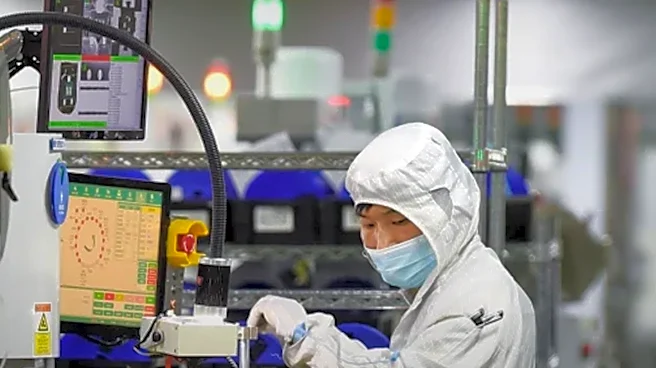
The push for open AI models by NVIDIA suggests a continued trend towards democratizing access to advanced AI tools, which could lead to a more diverse and globally distributed AI development landscape. This may prompt other major U.S. tech companies to re-evaluate their strategies regarding proprietary versus open-source AI development. Countries, including those with smaller economies, are likely to explore how to leverage these open technologies to build their own AI ecosystems, potentially reducing reliance on solutions from dominant tech powers. The anticipated expansion of AI into physical industries will drive demand for specialized AI applications and hardware, creating new markets and requiring significant investment in infrastructure and talent development. The ongoing imbalance between AI computing demand and chip supply will likely continue to fuel efforts to increase semiconductor manufacturing capacity globally, including in the U.S., and could lead to strategic partnerships and investments in this critical sector.
Beyond the Headlines
The advocacy for open AI models touches upon deeper ethical and geopolitical implications. Technological sovereignty, particularly for smaller nations, becomes a critical factor in an increasingly AI-driven world. Relying solely on closed AI systems developed by a few dominant players could lead to a form of digital colonialism, where cultural nuances, linguistic specificities, and national values might be overlooked or suppressed. Open models offer a pathway to embed local contexts and ethical considerations directly into AI systems, fostering greater trust and adoption. This also raises questions about data privacy and security, as localized AI development might allow for more stringent national controls over data. Furthermore, the concept of an 'AI Silk Road' proposed by Lebaredian suggests a potential shift in global technological alliances and trade routes, moving beyond traditional Western-centric models and fostering greater collaboration among emerging tech hubs. This could reshape geopolitical influence and economic power dynamics in the long term.