



What's Happening?
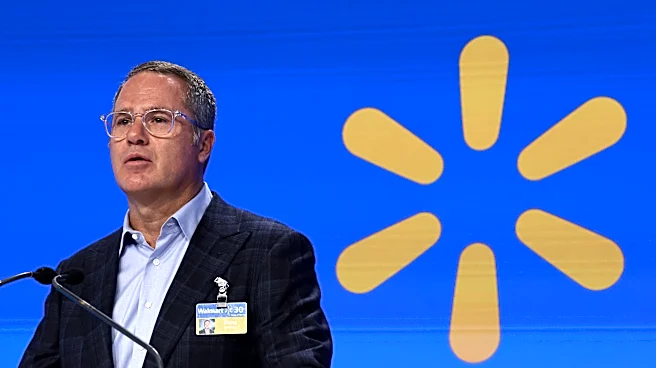
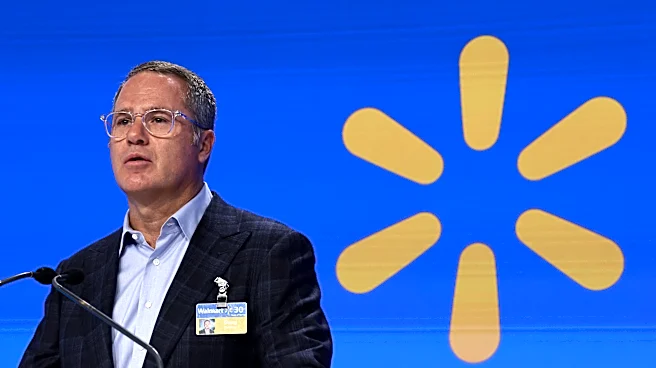
Doug McMillon, the former president and CEO of Walmart, retired from his CEO role on January 31, 2026, after nearly 12 years at the helm. John Furner, who previously led Walmart U.S. and began his career as an hourly associate in 1993, succeeded McMillon as CEO on February
1, 2026. McMillon's career at Walmart spanned over 40 years, starting as an hourly associate in a distribution center in 1984. He held various senior positions, including leading Sam's Club and Walmart International, before becoming CEO in February 2014. During his tenure, McMillon focused on transforming Walmart into a tech-powered, omnichannel retailer, emphasizing e-commerce growth, the Walmart+ membership program, associate investment through wage increases and education programs, and sustainability initiatives like Project Gigaton. He remains an advisor to Furner through January 31, 2027, and was expected to stay on the board through the June 2026 annual meeting.
Why It's Important?
This leadership transition at Walmart, one of America's largest companies, signifies a planned succession that aims to maintain stability and continuity in its strategic direction. McMillon's legacy of digital transformation, including the expansion of e-commerce, grocery pickup, and home delivery, has positioned Walmart to compete effectively in a rapidly evolving retail landscape. The continued focus on technology, particularly AI adoption, as highlighted by McMillon, suggests that Walmart will further integrate advanced solutions into its operations, potentially impacting supply chains, customer experience, and workforce development across the U.S. retail sector. The emphasis on associate investment also sets a precedent for labor practices within the industry, influencing wages and benefits for a significant portion of the American workforce. The smooth handover to an internal candidate like John Furner, who has a deep understanding of the company's operations, is crucial for investor confidence and the company's ongoing market performance.
What's Next?
John Furner's immediate focus will likely be on continuing the strategic initiatives set in motion by McMillon, particularly in further integrating technology and enhancing Walmart's omnichannel capabilities. The company will aim to solidify its position against competitors in the e-commerce space while leveraging its extensive physical store network. As an advisor, McMillon will provide guidance during this transition period, ensuring that key projects and long-term goals remain on track. Future financial disclosures will reflect Furner's leadership and the company's performance under his direction. The retail industry will closely watch how Walmart navigates ongoing challenges such as supply chain disruptions, inflation, and evolving consumer preferences under its new CEO.
Beyond the Headlines
The transition at Walmart reflects a broader trend in corporate leadership where long-serving CEOs, often instrumental in significant transformations, are succeeded by internal candidates who have grown through the company ranks. This approach emphasizes institutional knowledge and a deep understanding of the company's culture and operational complexities. McMillon's journey from an hourly associate to CEO serves as a powerful narrative of upward mobility within a large corporation, potentially inspiring other employees. The strategic shift towards a tech-powered, omnichannel model under McMillon highlights the imperative for traditional retailers to adapt to digital disruption, a lesson that resonates across various industries. The focus on sustainability and employee welfare also underscores a growing expectation for corporate responsibility beyond just financial performance.