





What's Happening?
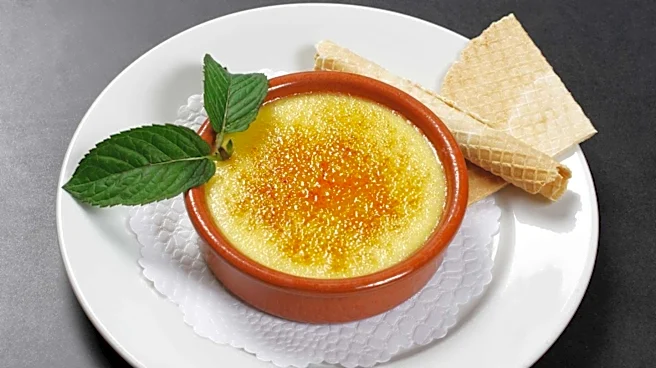
Baked egg custard, prepared from a recipe, contains 147 calories per half-cup ramekin, with a base of 104 calories per 100 grams. This homemade version, consisting of milk, eggs, and sugar, is presented as a nutritionally superior choice compared to custards
made from dry mixes or commercially prepared egg custard pies. Custard made from a dry mix with whole milk contains 172 calories for the same half-cup serving, while a slice of store-bought egg custard pie can reach 221 calories. The homemade baked custard also provides more protein, with 7.1 grams per ramekin, compared to 5.6 grams from a whole-milk mix and 5.8 grams from a 2% milk mix. The higher calorie count in pies is largely due to the crust, which significantly increases density and sodium content.
Why It's Important?
This nutritional comparison is significant for consumers in the U.S. who are increasingly focused on healthier eating and calorie management. Understanding the caloric and protein differences between homemade and commercially prepared desserts can empower individuals to make more informed dietary choices. Opting for baked-from-scratch custard allows for better control over ingredients, particularly sugar content, aligning with dietary guidelines that recommend limiting added sugars. This information can help individuals manage their intake of calories, saturated fat, and cholesterol, contributing to better overall health outcomes. The data highlights that not all versions of a dish are nutritionally equal, encouraging a closer look at food preparation methods and ingredient sourcing.
What's Next?
As consumers become more health-conscious, there may be a growing interest in home baking and scratch cooking to control nutritional content. This trend could lead to an increase in demand for recipes and ingredients that support healthier dessert options. Food manufacturers might respond by developing healthier dessert mixes or ready-to-eat options with improved nutritional profiles, such as reduced sugar or higher protein content. Educational initiatives from health organizations could further promote the benefits of homemade foods over processed alternatives, emphasizing the ability to customize meals for specific dietary needs and preferences. This could also influence food labeling regulations, pushing for clearer distinctions between homemade and commercially prepared items.
Beyond the Headlines
The detailed nutritional breakdown of egg custard variations reflects a broader cultural shift towards transparency in food information and a desire for greater control over one's diet. This goes beyond simple calorie counts to consider the source and quality of ingredients. The emphasis on homemade options suggests a return to traditional cooking methods, valuing fresh ingredients and mindful preparation. This trend can have wider implications for the food industry, encouraging innovation in healthier product development and potentially shifting consumer preferences away from highly processed foods. It also highlights the importance of food literacy, enabling individuals to critically evaluate food choices and understand the impact of preparation methods on nutritional value.