




What's Happening?
Wall Street experienced a record-breaking day for put option volume on Thursday, November 5, with 11.23 million contracts traded at Cboe, surpassing the previous record of 10.22 million set in April 2025. This surge occurred during a significant market
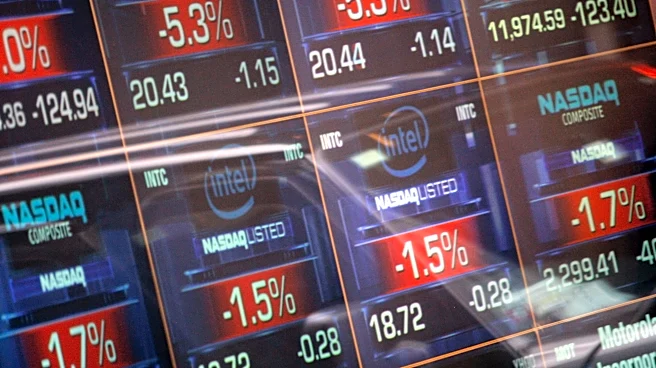
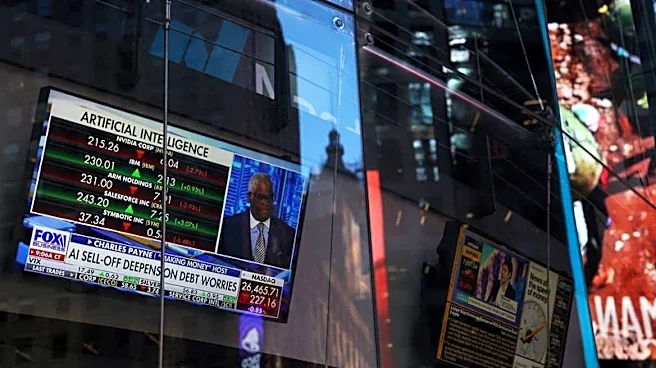
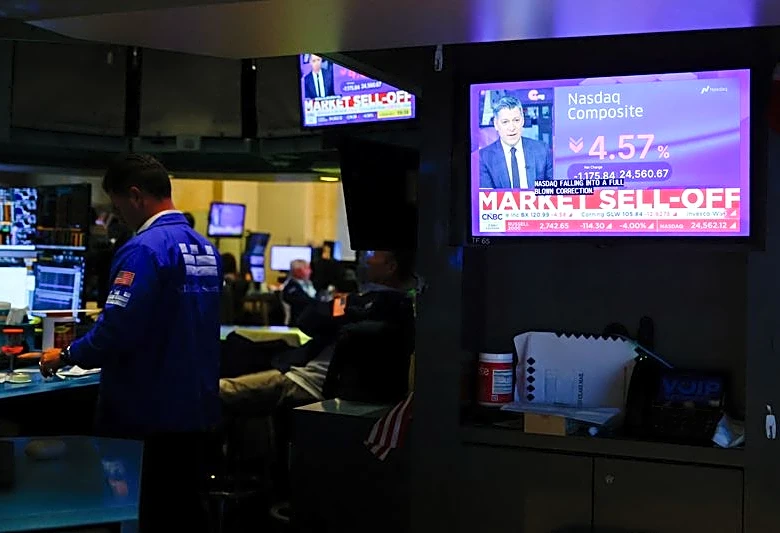
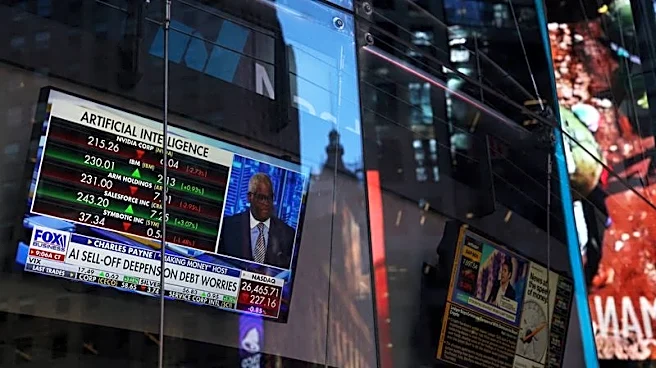
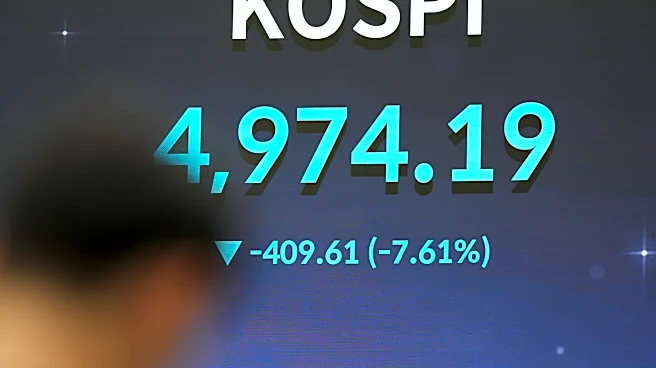
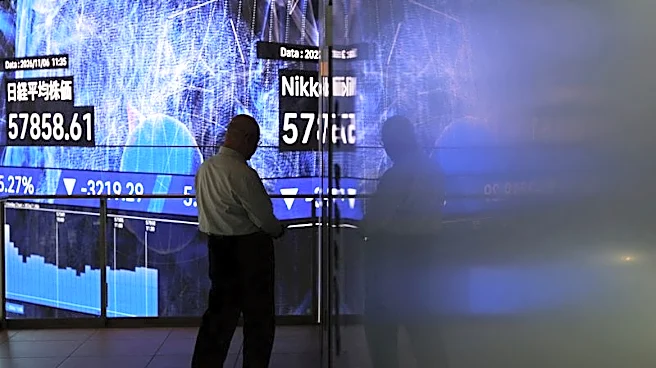
selloff where the NASDAQ Composite plunged 5.5%, the S&P 500 fell 4.4%, and the NASDAQ 100 lost approximately $2.5 trillion in market value. The CBOE Volatility Index (VIX) also surged by 69.7% in one day, closing at 28.18, indicating elevated uncertainty. Investors were reportedly growing more concerned about AI valuations, rising financing costs, and potential new limits on data-center construction following the midterm elections. The heavy buying of short-dated puts can exacerbate a selloff, as market makers hedge by shorting stock or futures, creating a feedback loop that pushes indexes lower. Despite a partial rebound on Friday, both the S&P 500 and Nasdaq ended the week lower.
Why It's Important?
The record put volume signifies a substantial increase in investor demand for downside protection, reflecting a rapid shift from confidence in the AI-driven bull market to a scramble for safety. This heightened hedging activity can amplify market declines, as market makers' need to short stocks to balance their positions can accelerate the downward trend. The surge in the VIX to near 'high-fear' thresholds further underscores the market's anxiety. This situation is critical because it suggests that the market's underlying confidence in the AI sector, which has been a primary growth driver, is cracking. The concerns about AI valuations and the impact of post-midterm election policies on data center construction could lead to a re-evaluation of investment strategies, potentially shifting capital away from high-growth tech stocks towards more stable assets. This could affect retirement portfolios and broader economic stability.
What's Next?
Investors will be closely monitoring several key signals in the coming weeks. The direction of the VIX will be crucial; a drop back towards its average would suggest Thursday's panic was short-lived, while a close above 30 would indicate sustained high fear. The put-heavy late-November expirations for SPY and QQQ will show where hedging demand is concentrated. Any post-midterm policy actions regarding data-center construction rules could either resume the selloff or calm the market. Further declines in Treasury yields could alleviate concerns about financing costs for companies investing heavily in AI infrastructure. The mixed history of record put volume as a crash signal means that while extreme demand for protection can sometimes coincide with market bottoms, it is not a guaranteed indicator. The current situation raises the question of whether this is a temporary panic or the beginning of a longer-term shift away from risk-on assets.
Beyond the Headlines
The record put volume and the associated market selloff highlight a deeper vulnerability within the current market structure, particularly concerning the rapid growth of the AI sector. The sudden shift in investor sentiment, from post-election rally to widespread hedging, suggests that the market's reliance on the AI narrative may be more fragile than previously perceived. The influence of options hedging on market dynamics, where automatic, rules-based selling can amplify declines beyond what fundamentals alone would justify, points to a systemic risk. This event could prompt a re-evaluation of how market participants manage risk and how regulatory bodies oversee complex financial instruments like options. Furthermore, the political implications of midterm elections, specifically the potential for new limits on data center construction, underscore the growing intersection of technology, policy, and market stability, suggesting that future market movements may be increasingly influenced by regulatory and political developments.