




What's Happening?
Pete Townshend, the creative force behind The Who, inadvertently played a significant role in shaping Jimi Hendrix's signature sound. In a 2020 interview with Ultimate Classic Rock, Townshend revealed that he provided crucial advice to Hendrix's manager,
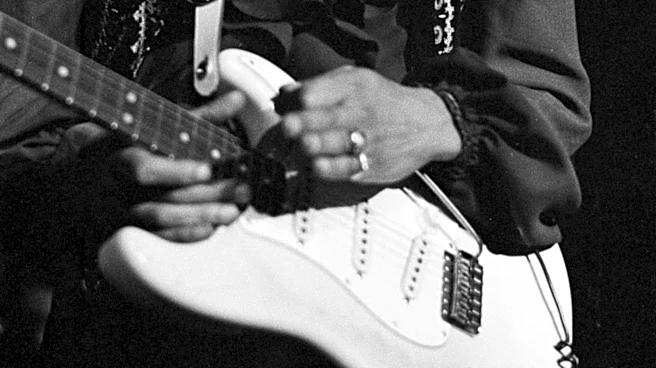
Michael Jeffery, regarding amplifier equipment when Hendrix first arrived in London in the mid-1960s. Townshend shared details of his setup, which involved combining a Sound City amplifier (a Marshall substitute) with a Marshall to achieve a specific 'slabby sound.' This advice, intended as a helpful gesture, ultimately contributed to the powerful and distinctive sound that became synonymous with Jimi Hendrix's performances. Townshend expressed regret over giving the tip, particularly after Hendrix, allegedly supporting The Who at a show in June 1967, upstaged every other act with his amplified sound. Despite their differing guitar styles—Townshend's built on aggression and Hendrix's being looser and more fluid—there was a mutual appreciation between the two musicians.
Why It's Important?
This anecdote highlights the interconnectedness and influence within the music industry, particularly during the formative years of rock and roll. It demonstrates how seemingly minor interactions or pieces of advice can have profound and lasting impacts on the trajectory of an artist's career and, by extension, on the broader musical landscape. For Jimi Hendrix, receiving this technical guidance from an established artist like Townshend likely accelerated his ability to craft the groundbreaking sound that captivated audiences and cemented his legendary status. It underscores the collaborative, albeit sometimes competitive, environment among musicians striving for innovation. The story also offers insight into the evolution of guitar technology and sound engineering in rock music, showing how specific equipment choices and combinations were crucial in defining the sonic identities of iconic bands and artists. This interaction ultimately contributed to the development of a sound that would influence countless musicians and shape the future of rock music.
What's Next?
While this event occurred decades ago, its retelling continues to contribute to the rich historical narrative of rock music. The ongoing discussion and analysis of such interactions between legendary musicians like Pete Townshend and Jimi Hendrix will likely continue to be a subject of interest for music historians, fans, and aspiring artists. It serves as a reminder of the often-unforeseen consequences of creative exchanges and the ripple effects they can have across generations of music. Future documentaries, biographies, or academic studies on the history of rock and roll may further explore these connections, offering new perspectives on how the sounds and styles of the era were forged through a complex web of influences and collaborations. The legacy of both artists, and the impact of their individual and shared contributions, will undoubtedly endure, prompting continued appreciation and study.
Beyond the Headlines
Beyond the immediate impact on Jimi Hendrix's sound, this story touches upon the broader theme of mentorship and influence in creative fields. Townshend's initial willingness to share his knowledge, followed by his humorous regret, illustrates the dynamic nature of artistic development where collaboration and competition often intertwine. It also subtly highlights the rapid evolution of musical technology and performance techniques in the 1960s, where innovations in amplification and effects were constantly pushing the boundaries of what was possible. The anecdote serves as a cultural touchstone, emphasizing how individual choices and interactions can contribute to the collective memory and mythology of an era. It reinforces the idea that even the most iconic figures are part of a larger ecosystem of influence, where ideas and techniques are exchanged, sometimes with unexpected and monumental results, shaping not just individual careers but entire genres of music.