



What's Happening?
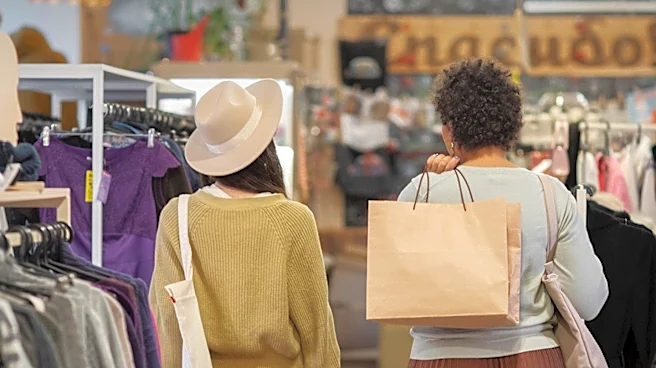
Holiday shoppers are increasingly turning to second-hand stores this season, a trend dubbed 'Thriftmas,' as a strategy to manage high prices. This shift in consumer behavior is highlighted by NPR's Emily Feng, who visited Fia Thomas's thrift store in Washington,
D.C., accompanied by Post reporter Maggie Penman. The practice involves purchasing pre-owned items as gifts, reflecting a broader effort by consumers to find more affordable options during the holiday shopping period. This movement away from traditional retail is a direct response to current economic conditions, where inflation and rising costs are impacting household budgets. The popularity of 'Thriftmas' suggests a growing acceptance and preference for sustainable and cost-effective shopping alternatives.
Why It's Important?
The rise of 'Thriftmas' is significant as it indicates a notable change in consumer spending habits, potentially impacting the retail sector. Traditional retailers, particularly those focused on new goods, may experience reduced sales as more shoppers opt for second-hand items. Conversely, thrift stores and consignment shops stand to benefit from increased foot traffic and sales, potentially boosting their revenue and market presence. This trend also underscores a growing consumer awareness regarding sustainability and value, which could influence long-term purchasing decisions beyond the holiday season. The shift could also encourage more businesses to explore circular economy models, such as offering refurbished or pre-owned products, to cater to this evolving consumer demand. The economic implications extend to manufacturing and supply chains, as reduced demand for new products could lead to adjustments in production volumes.
What's Next?
Should the 'Thriftmas' trend continue to gain momentum, it could lead to several foreseeable consequences. Retailers might respond by offering more aggressive discounts or by integrating second-hand or refurbished product lines into their offerings to compete. We may also see an expansion of online platforms dedicated to pre-owned goods, making 'Thriftmas' shopping even more accessible. Additionally, the increased demand for thrifted items could lead to a greater focus on the quality and curation of goods available in second-hand markets. Consumer advocacy groups might also highlight the environmental benefits of this trend, further encouraging its adoption. The success of 'Thriftmas' this holiday season will likely be closely watched by economic analysts and retail strategists to gauge its potential for sustained growth and impact on future retail landscapes.
Beyond the Headlines
Beyond the immediate economic impact, the 'Thriftmas' phenomenon touches upon deeper cultural and ethical dimensions. It challenges the traditional consumerist narrative of holiday gift-giving, which often emphasizes new and expensive items. By embracing second-hand gifts, consumers are not only saving money but also participating in a more sustainable consumption model, reducing waste and extending the lifecycle of products. This shift could foster a greater appreciation for vintage or unique items, moving away from mass-produced goods. Ethically, it promotes resourcefulness and conscious consumption, aligning with broader environmental movements. Culturally, it may normalize and even elevate the status of thrift shopping, transforming it from a necessity for some into a desirable choice for many, thereby reshaping societal perceptions of value and luxury.