
What's Happening?
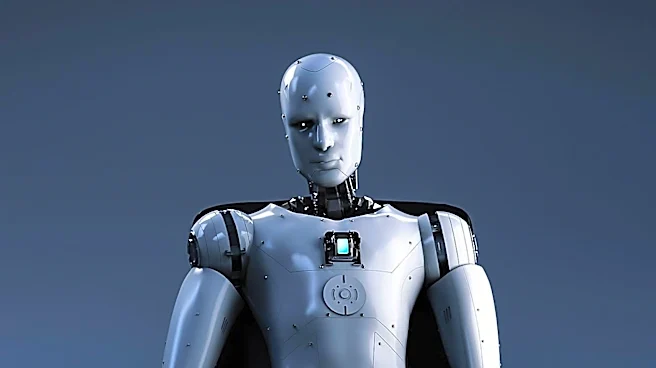
Tesla has announced significant updates to its Optimus humanoid robot project, marking a notable advancement in the integration of AI and robotics within the manufacturing sector. This development is seen
as a critical step in automating industrial processes, promising increased efficiency, scalability, and cost reductions. However, the broader implications for labor markets and global economic equality require careful consideration. Tesla's Optimus project is part of a larger trend in the industrial sector, where companies like Boston Dynamics and ABB are also pushing the boundaries of robotics. The success of Optimus will depend on its ability to differentiate itself in a competitive field, potentially through cost-effectiveness or unique capabilities.
Why It's Important?
The updates to Tesla's Optimus project highlight the potential for AI and robotics to transform manufacturing, offering benefits such as reduced costs and increased flexibility. This development could enhance the competitive edge of industrialized nations in high-tech manufacturing. However, it also poses challenges, particularly for workers in manufacturing industries who may face displacement as automation becomes more prevalent. Policymakers and labor unions must address these socioeconomic shifts to mitigate potential negative impacts. The announcement also underscores the complexity of technological innovation, as the path to widespread adoption is fraught with technical, economic, and societal challenges.
What's Next?
In the coming months, Tesla is expected to showcase incremental progress with Optimus through high-profile demonstrations aimed at attracting investor confidence and public attention. However, large-scale deployment in manufacturing facilities may remain limited to pilot projects. The technology may excel in simple, repetitive tasks but struggle with more complex operations. Competitors will continue to refine their robotics solutions, potentially pressuring Tesla to accelerate development. The broader adoption of robotics in manufacturing will require overcoming technical limitations and addressing the hidden costs associated with automation.
Beyond the Headlines
Tesla's strategy of deploying humanoid robots at scale faces significant hurdles, including technical limitations and the hidden costs of maintenance and cybersecurity risks. While the adaptability of humanoid robots is touted, it may be more aspirational than practical in the near term. The narrative of lowering labor costs often overlooks these hidden expenses, which could offset the supposed savings. This development serves as a reminder that technological progress is rarely linear, and bold claims often mask the complexity of true innovation.