


What's Happening?
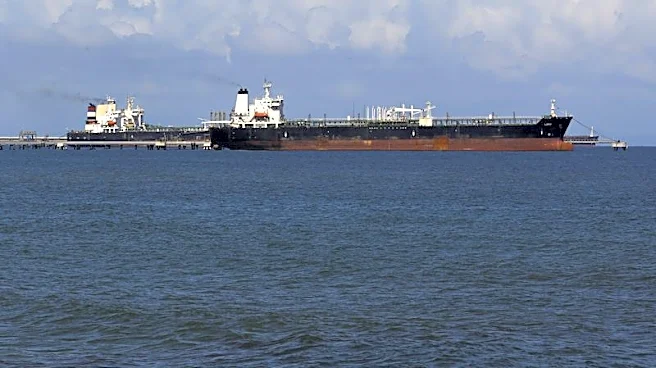
Chevron is investing $7 billion over five years in its Venezuelan joint ventures with the goal of doubling oil output to approximately 600,000 barrels per day by 2031. This strategic move is expected to yield some of Chevron's cheapest barrels, with total
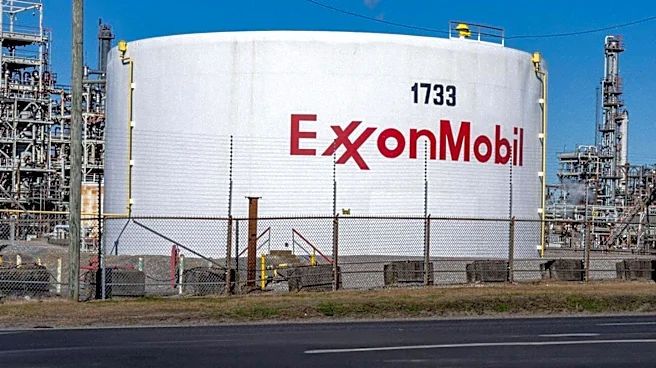
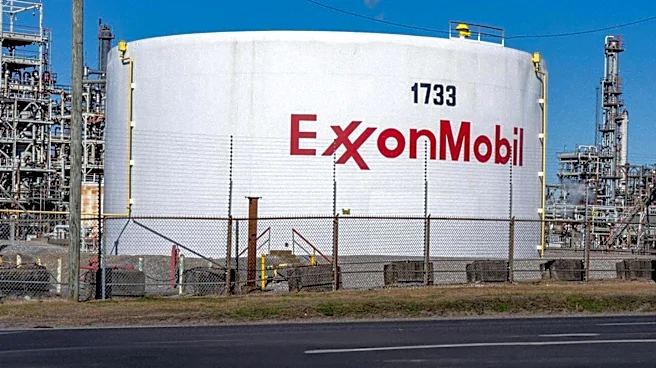
costs projected to be under $20 per barrel. Chairman and CEO Mike Wirth emphasized that Chevron is now directly lifting all the oil, primarily directing it to its Pascagoula and El Segundo refineries. In contrast, Exxon Mobil is adopting a more conservative approach regarding investments in Venezuela. CEO Darren Woods stated that Exxon is not in a rush and requires improvements in Venezuela's tax and legal rules, along with stronger protections for investors, before committing capital. Both companies recently exceeded earnings expectations, with Chevron reporting an adjusted $5.28 per share and Exxon posting $4.23 per share, partly due to high oil prices.
Why It's Important?
Chevron's substantial investment in Venezuela signifies a calculated risk and a potential competitive edge in the U.S. energy market. By securing a source of low-cost crude, Chevron aims to enhance its refining margins and overall profitability, especially given its technological advantage in distillate output. This move could strengthen Chevron's position as a major supplier to its U.S. refineries, potentially leading to more stable fuel prices for consumers in regions served by these facilities. Conversely, Exxon Mobil's cautious stance highlights the significant political and economic risks associated with investing in Venezuela, a country with a history of seizing foreign oil assets. This divergence in strategy could lead to different long-term outcomes for the two energy giants, with Chevron potentially gaining a first-mover advantage in a high-potential, albeit risky, market, while Exxon prioritizes investor protection and stability. The decision also underscores the ongoing geopolitical considerations that influence global oil production and supply chains affecting the U.S.
What's Next?
The success of Chevron's Venezuelan investment hinges on its ability to reach approximately 300,000 barrels per day of gross Venezuelan production by year-end. This will be a key indicator of the project's viability and Chevron's capacity to navigate the operational and political complexities in Venezuela. For Exxon Mobil, the focus will be on the startup of the Uaru project in Guyana and a final investment decision on Rovuma LNG, both anticipated in the current quarter. The differing approaches of these two major U.S. energy companies will be closely watched by investors and industry analysts. The broader market will also monitor the stability of refining margins, which both companies acknowledge could ease as refinery runs recover. The long-term implications for U.S. energy security and the global oil supply will depend on the outcomes of these strategic decisions.
Beyond the Headlines
The contrasting strategies of Chevron and Exxon Mobil in Venezuela illuminate the complex interplay between economic opportunity, geopolitical risk, and corporate governance in the global energy sector. Chevron's aggressive investment reflects a willingness to engage with challenging political environments for potentially high returns, a strategy that could be seen as either bold or reckless depending on the outcome. Exxon's more conservative approach, prioritizing legal and tax stability, reflects a focus on long-term shareholder value and risk mitigation, particularly given Venezuela's past actions regarding foreign assets. This situation also highlights the ethical considerations for U.S. companies operating in countries with unstable political climates. The decisions made by these energy giants will not only impact their financial performance but also contribute to the broader narrative of U.S. corporate engagement in international markets and the delicate balance between profit and responsibility.