






What's Happening?
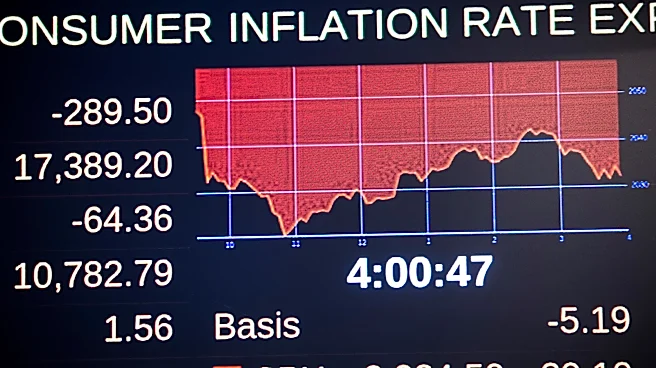
The Personal Consumption Expenditures (PCE) price index, the Federal Reserve's preferred inflation gauge, increased to 3.6% year-over-year in September, up from 3.4% in August. This data was released last Thursday. The Federal Reserve had implemented
a federal funds rate hike in September, and the upcoming October inflation data, due on November 25, is expected to reflect the full impact of this hike. Mortgage rates are highly sensitive to inflation reports, job numbers, and Federal Reserve meetings. For instance, the average interest rate on a 30-year fixed-rate mortgage recently decreased to 7.01% APR, a drop of six basis points from the previous day and 17 basis points from a week prior. This fluctuation is partly attributed to post-midterm election clarity and a decline in oil prices.
Why It's Important?
The rise in the PCE index is significant for the U.S. economy, particularly for consumers and the housing market. The Federal Reserve utilizes the federal funds rate as its primary tool to manage inflation while also aiming to support maximum employment. An increase in inflation, as indicated by the PCE, often prompts the Fed to consider further rate hikes. While the Fed does not directly set mortgage rates, its adjustments to the federal funds rate influence the cost of borrowing for banks, which in turn affects mortgage rates. Higher mortgage rates can reduce housing affordability, impacting potential homebuyers and the broader real estate sector. Conversely, a stable or improving jobs report could provide the Fed with more confidence to raise rates without severely harming employment, potentially leading to continued upward pressure on borrowing costs.
What's Next?
The release of the October jobs report is anticipated to be a key factor influencing future Federal Reserve decisions and, consequently, mortgage rates. If the report indicates steady or improved employment, it could strengthen the case for the Federal Reserve to implement another increase in overnight borrowing rates at its next meeting scheduled for December 8-9. The October PCE report, set to be released on November 25, will also be closely watched for further insights into inflation trends and the effectiveness of previous rate hikes. These upcoming data releases will be crucial in determining the trajectory of monetary policy and its impact on the U.S. economy and financial markets.
Beyond the Headlines
The interplay between inflation, employment, and monetary policy highlights the delicate balancing act faced by the Federal Reserve. The Fed's dual mandate to control inflation and support maximum employment means that economic indicators are constantly scrutinized for their potential impact on policy decisions. The current environment, characterized by rising inflation and fluctuating mortgage rates, underscores the challenges in achieving both objectives simultaneously. The sensitivity of mortgage rates to economic data also means that even minor shifts in bond markets or global news can have immediate effects on borrowing costs, creating a dynamic and often unpredictable landscape for consumers and financial institutions alike. This continuous adjustment reflects the complex nature of modern economic management.