






What's Happening?
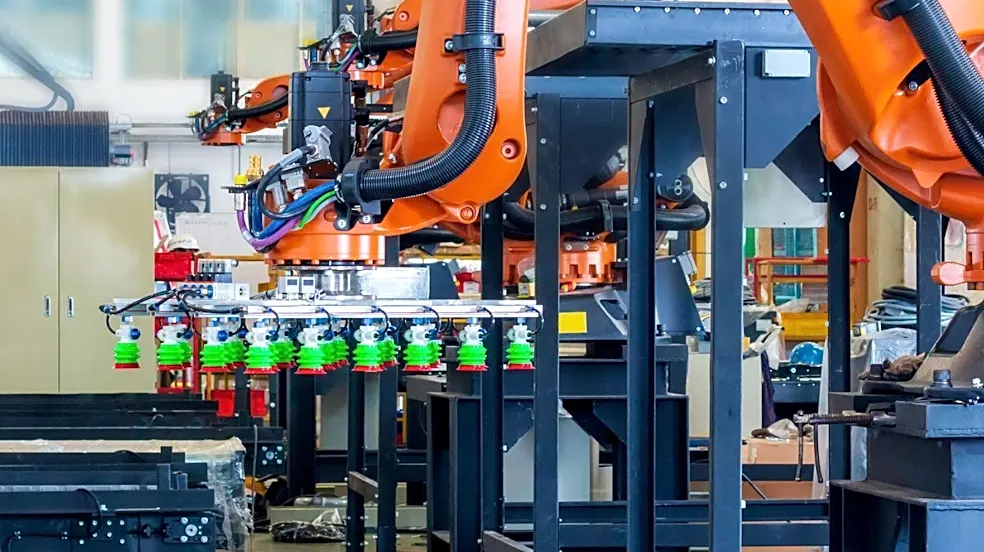
ABB Robotics has launched its first end-to-end, vision-based industrial-grade physical AI solution, integrating AI Robot Trainer into its Fashion Inductor module. This new solution is designed to automate fashion logistics, specifically robotic sorting
applications, with greater efficiency and reduced engineering effort. The upgraded Fashion Inductor is built to handle the variability inherent in fashion logistics, where garments, packaging, and product presentation constantly change. It achieves this through application-specific vision technology, AI-powered Automatic Path Planning, and ABB’s robot-control platforms. The AI Robot Trainer adds pre-trained fashion-specific vision models, application tools, and rapid retraining capabilities, allowing system integrators to adapt applications as product ranges and operating requirements evolve without needing specialist AI expertise. This system is described as a lifecycle-managed physical AI solution, capable of continuous improvement as it encounters new products and operating conditions.
Why It's Important?
This innovation from ABB is crucial for the fashion industry, which faces significant challenges in automating its logistics due to the diverse and constantly changing nature of its products. The new solution can reduce engineering and commissioning effort by up to 75%, while supporting throughput of up to 1,300 items per hour per cell and achieving picking accuracy targets above 99.5%. This level of automation and accuracy can lead to substantial cost savings, improved operational efficiency, and faster delivery times for fashion retailers and manufacturers. By making robotic sorting more adaptable and easier to deploy, ABB is addressing a critical need in global supply chains, particularly as the demand for professional service robotics continues to grow. This advancement helps the fashion industry keep pace with e-commerce demands and consumer expectations for rapid fulfillment.
What's Next?
The launch of the Fashion Inductor with integrated Physical AI marks the first step in ABB's broader rollout of vision-based Physical AI solutions. This indicates a future where robots are increasingly autonomous, versatile, and capable of adapting to dynamic environments. Future developments will likely focus on expanding the application of this technology to other complex logistics challenges within and beyond the fashion industry. The continuous improvement model of this lifecycle-managed AI solution suggests ongoing enhancements in robot capabilities and adaptability. As more industries adopt similar physical AI solutions, there will be a growing demand for skilled professionals who can manage, monitor, and optimize these advanced robotic systems, potentially reshaping the workforce in logistics and manufacturing.
Beyond the Headlines
The deployment of physical AI in fashion logistics raises broader implications concerning the future of work and the ethical considerations of automation. While increasing efficiency, it could also lead to job displacement in manual sorting and logistics roles, necessitating workforce retraining and new employment opportunities in AI management and maintenance. The ability of robots to adapt to changing product characteristics through AI also highlights the growing sophistication of machine learning in real-world applications, pushing the boundaries of what automation can achieve. Furthermore, the emphasis on continuous improvement and lifecycle management for AI solutions suggests a shift towards more dynamic and evolving technological systems, requiring ongoing oversight and ethical governance to ensure responsible development and deployment.