



What's Happening?
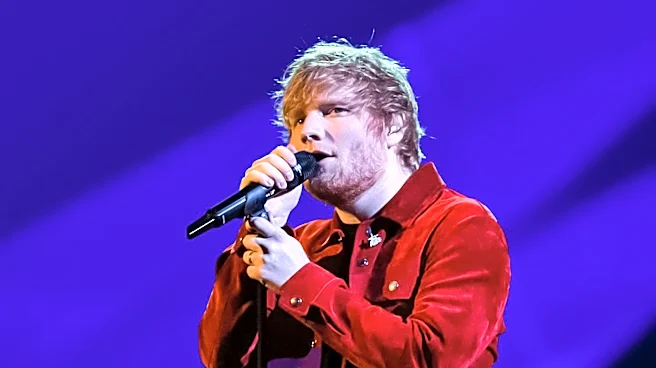
Hannah Einbinder, known for her role in the HBO series 'Hacks' and as an outspoken advocate for Palestine, publicly criticized Ed Sheeran. This criticism came after Sheeran defended the removal of rapper Macklemore from his 'Loop' tour. Macklemore was
reportedly removed after making pro-Palestine comments on stage. Einbinder expressed her disapproval on social media, specifically on Instagram, by humorously wishing Sheeran a severe sunburn. She also shared a poem titled 'Apolitical Intellectuals' by Guatemalan activist Otto René Castillo and reshared posts from other supporting acts who dropped out of Sheeran's tour in solidarity with Macklemore and Palestine. Einbinder has a history of advocating for Palestinian rights, notably during her 2025 Emmy acceptance speech where she stated, 'Go Birds, f*** ICE and free Palestine.'
Why It's Important?
This event highlights the increasing intersection of entertainment, celebrity influence, and political activism, particularly concerning the Israeli-Palestinian conflict. Einbinder's public criticism of a high-profile musician like Ed Sheeran underscores the pressure on public figures to take stances on global political issues. The removal of Macklemore from a tour due to political statements reflects the potential professional repercussions artists face when expressing controversial views, impacting their careers and public platforms. This situation also brings to light the ongoing debate within the entertainment industry regarding freedom of speech versus commercial interests and the perceived neutrality of artists. The incident could influence how other artists and their management approach political commentary, potentially leading to more cautious or more vocal stances depending on their convictions and career considerations.
What's Next?
The immediate aftermath could see continued discussion and debate on social media platforms regarding artists' roles in political discourse and the implications of their statements. Ed Sheeran's team might issue a further statement or choose to remain silent, which could also be interpreted in various ways. Other artists might be prompted to either support or distance themselves from Macklemore's and Einbinder's positions, potentially leading to further shifts in tour lineups or public endorsements. This incident could also fuel ongoing conversations within the music industry about contractual clauses related to political expression and the boundaries of artistic freedom. The broader impact might include increased scrutiny on artists' political views by fans and the media, potentially influencing their public image and commercial viability.
Beyond the Headlines
This incident delves into the deeper implications of celebrity activism and the evolving landscape of public discourse. It raises questions about the responsibility of artists to use their platforms for social and political causes, especially when those causes are highly contentious. Einbinder's personal journey from previous Zionist beliefs to advocating for Palestinian rights, as detailed in an interview with activist Simone Zimmerman, illustrates the complex and often personal nature of these political stances. The event also highlights the power of social media as a tool for both expressing dissent and mobilizing support, allowing artists to bypass traditional media gatekeepers. The public's reaction to such events can reflect broader societal divisions and the increasing expectation for public figures to align with specific moral or political viewpoints, blurring the lines between entertainment and advocacy.