





What's Happening?
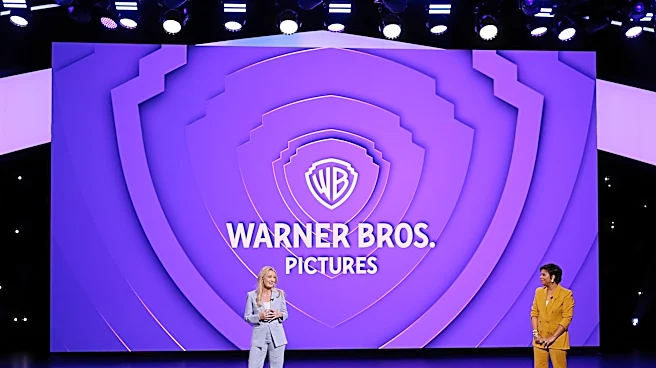
Pamela Abdy, former co-chair and CEO of Warner Bros. Motion Picture Group, delivered a passionate speech at the Women in Film Honors in Los Angeles, her first public appearance since her departure from Warner Bros. was announced. Abdy, who received the WIF
Vanguard Award, expressed 'pure unadulterated rage' about the challenges women face in the film industry. She highlighted instances where she was labeled 'difficult,' 'emotional,' or 'combative,' and criticized the industry's perception that films starring or directed by women are less profitable or have limited audiences. Abdy also pointed out the double standard where successful female directors like Greta Gerwig are still referred to as 'female directors' rather than simply 'directors,' suggesting an asterisk is often placed next to women's achievements. She emphasized that despite some women reaching leadership positions, it is becoming harder, not easier, to be a woman in the business.
Why It's Important?
Abdy's speech is significant as it comes from a high-profile female executive who recently exited a major studio, lending weight to her critique of systemic gender biases in Hollywood. Her remarks underscore ongoing issues of inequality, microaggressions, and the undervaluing of female-led projects, which can impact investment decisions, career progression for women, and the types of stories that get told. By challenging traditional box office tracking methods and the notion that male audiences won't support female-driven narratives, Abdy is advocating for a re-evaluation of industry metrics and biases that limit creative diversity. Her call for greater advocacy for women directors and a shift in how success is perceived could influence future industry practices, potentially leading to more equitable opportunities and a broader range of cinematic content.
What's Next?
Following her powerful address, Abdy stated she is currently taking a break and considering her next career move, emphasizing her desire to continue working with top storytellers. Her public stance could galvanize further discussions and actions within Hollywood regarding gender equality, potentially prompting other industry leaders and organizations to address the issues she raised. It may also encourage more women in the industry to speak out about their experiences. The industry might see increased pressure to re-evaluate hiring practices, project greenlighting processes, and marketing strategies to better support female talent and narratives. Her future role, whether in another studio or an independent venture, will be closely watched as she has clearly indicated her intention to continue fighting for what she believes is right in the film business.
Beyond the Headlines
Abdy's speech delves into deeper cultural and systemic issues beyond mere professional grievances. Her 'rage' reflects a broader frustration among women in various industries who face similar challenges of being undermined, underestimated, and subjected to different standards than their male counterparts. The critique of how women's success is often qualified ('female director') highlights a subtle yet pervasive form of discrimination that prevents women's achievements from being recognized on their own merit. This perpetuates a cycle where women constantly have to prove their worth. Her call to use this 'rage' as fuel for change suggests a shift from quiet endurance to active resistance, potentially inspiring a new wave of advocacy and activism within the entertainment sector and beyond, pushing for a more inclusive and equitable professional landscape.