

What's Happening?
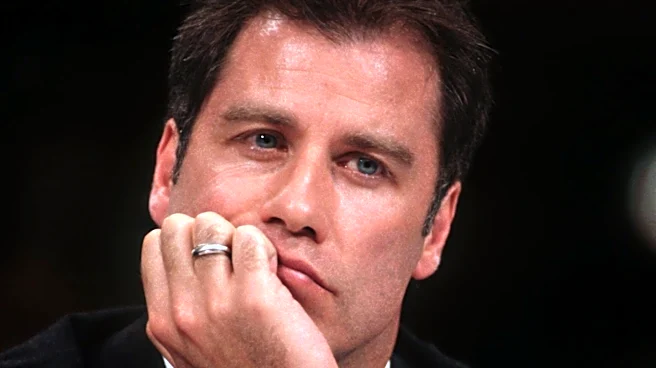
Actor John Travolta is starring in a new film titled 'November 1963,' which delves into conspiracy theories surrounding the assassination of President John F. Kennedy. Travolta, who was nine years old at the time of the assassination, recalls being sent
home from school and watching news coverage with his father, where early conspiracy ideas began to emerge. In the film, Travolta portrays John 'Handsome Johnny' Roselli, a mobster rumored to have connections to President Kennedy's murder. The movie specifically depicts President Kennedy's death from the perspective of Chicago organized crime members, who have been alleged to have played a role in the killing. President Kennedy, the 35th president of the United States, was assassinated by Lee Harvey Oswald on November 22, 1963, in Dallas, Texas. Oswald was subsequently killed by Jack Ruby two days later. Travolta noted his early memories of the event included discussions of multiple shooters and potential involvement from the mob or the government, themes that the new film aims to 'solidify and verify.'
Why It's Important?
The release of 'November 1963' is significant as it re-engages with one of the most enduring and debated events in American history: the assassination of President John F. Kennedy. By focusing on the perspective of organized crime, the film contributes to the ongoing public discourse and fascination with alternative theories surrounding the event. This cinematic exploration can reignite public interest in historical investigations and potentially influence contemporary perceptions of the assassination, especially among younger generations who may be less familiar with the historical context. The film's premise, which suggests mob or government involvement, aligns with the 1979 conclusion by the U.S. House Select Committee on Assassinations that President Kennedy was 'probably assassinated as a result of a conspiracy,' even though direct proof of mob or government involvement was never established. This renewed focus could prompt further discussions about historical truth, media representation of historical events, and the lasting impact of such a pivotal moment on American society.
What's Next?
The film 'November 1963' is scheduled to open in theaters on December 4. Its release is likely to generate renewed public discussion and media coverage regarding the various conspiracy theories surrounding President John F. Kennedy's assassination. Audiences and critics will evaluate the film's portrayal of historical events and its contribution to the ongoing narrative. The movie's depiction of mob involvement could lead to further scrutiny of historical documents and testimonies related to organized crime's potential role. Additionally, the film may inspire new documentaries, books, or academic discussions revisiting the assassination, potentially influencing how future generations understand this complex historical event. The film's success or controversy could also impact future cinematic projects that explore historical conspiracies.
Beyond the Headlines
The enduring fascination with President John F. Kennedy's assassination, as evidenced by films like 'November 1963,' highlights a deeper societal inclination to question official narratives and seek alternative explanations for significant historical events. This phenomenon reflects a broader cultural skepticism towards authority and a persistent desire for comprehensive understanding, especially when official accounts leave lingering doubts. The continuous production of media exploring these theories, decades after the event, underscores the assassination's profound psychological and cultural impact on the American psyche. It also touches upon the ethical considerations of historical storytelling in film, where dramatization can shape public perception and potentially blur the lines between historical fact and speculative interpretation. The film's focus on organized crime also taps into a long-standing American narrative of hidden powers and clandestine operations influencing national events, reflecting a deep-seated cultural anxiety about unseen forces at play.