







What's Happening?
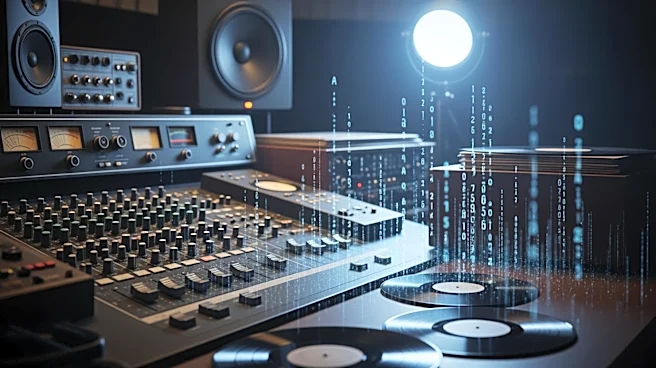
Recent investigations have revealed that music from various artists is being used in AI training datasets without their explicit consent. The Atlantic's 'AI Watchdog' series has made it easier for artists to discover if their music is included in these
datasets, which are often used to develop generative music products. A significant dataset, assembled by LAION, contains over 12 million music tracks from YouTube, highlighting the scale of the issue. These datasets typically include links to music rather than the audio itself, but the lack of legal enforcement allows for potential misuse. The situation is exacerbated by companies like Google, which have been accused of using music uploaded to YouTube for AI training, citing their terms of service as justification. This has led to legal challenges from musicians who argue that their intellectual property rights are being violated.
Why It's Important?
The use of artists' music in AI training sets without consent raises significant ethical and legal questions. It challenges the traditional notions of authorship and originality, as AI-generated music can closely mimic existing works. This practice not only undermines the creative rights of artists but also poses a threat to the music industry by potentially devaluing original compositions. The situation highlights a broader issue of data privacy and the need for clearer regulations regarding the use of personal and creative data in AI development. As AI technology continues to advance, the balance between innovation and intellectual property rights becomes increasingly critical, impacting artists, tech companies, and consumers alike.
What's Next?
The revelations from The Atlantic's investigation could lead to further legal actions from artists seeking to protect their intellectual property rights. There is a growing call for more transparency and regulation in the use of AI training datasets to ensure that artists' rights are respected. Tech companies may face increased scrutiny and pressure to revise their terms of service and data usage policies. Additionally, this issue could prompt broader discussions about the ethical implications of AI in creative industries, potentially leading to new legislation aimed at protecting artists and their work.
Beyond the Headlines
The unauthorized use of music in AI training sets also touches on deeper societal issues, such as the exploitation of marginalized communities. Many AI-generated music models rely heavily on genres rooted in Black culture, raising concerns about cultural appropriation and the lack of compensation for the original creators. This situation reflects broader patterns of inequality and exploitation in the tech industry, where the benefits of innovation are often unevenly distributed. Addressing these issues requires a comprehensive approach that considers the cultural, ethical, and economic dimensions of AI development.