





What's Happening?
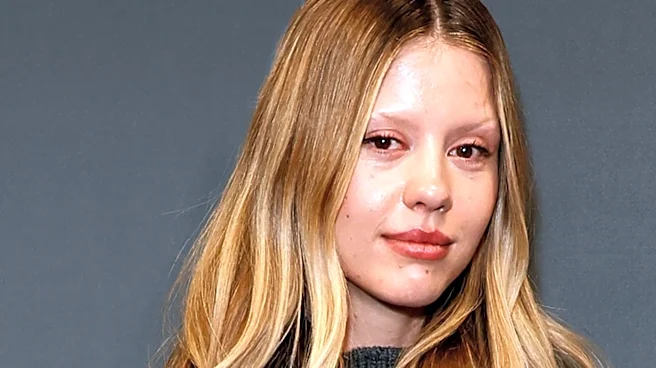
Actress Mia Goth has publicly criticized Meta, the parent company of Instagram, after an AI-manipulated image falsely depicted her wearing a T-shirt with the phrase 'MY EX IS MY BIGGEST FAN.' The image, which circulated on an Instagram account with a blue
verification badge and approximately one million followers, appeared days after news broke of Goth's divorce filing from actor Shia LaBeouf. Goth's representatives confirmed the image was fabricated and stated that she does not operate any social media accounts. Her spokesperson, Christine Tripicchio, expressed concern that a fan account could receive a verification badge and criticized Instagram for prioritizing the dissemination of manipulated images over protecting a public figure's likeness. Meta has since removed the profile for violating its terms and conditions. Goth filed for divorce from LaBeouf on October 6, citing irreconcilable differences and requesting primary custody of their four-year-old daughter.
Why It's Important?
This incident highlights growing concerns within the entertainment industry regarding the unauthorized use of artificial intelligence to create convincing but fabricated images of public figures. The ease with which AI can generate and disseminate such content poses significant challenges to personal privacy, reputation, and the integrity of digital information. The fact that a verified fan account was the source of the manipulated image further complicates efforts to distinguish authentic celebrity content from AI-generated fakes, potentially misleading millions of followers. For Meta and other social media platforms, this raises questions about their content moderation policies, verification processes, and their responsibility to protect users, especially public figures, from harmful deepfakes and misinformation. The case underscores the urgent need for robust mechanisms to identify and label AI-generated content, as well as clearer guidelines for account verification to prevent the legitimization of unofficial or misleading profiles.
What's Next?
The removal of the offending Instagram profile by Meta indicates a reactive measure, but the broader issue of AI-generated content and its impact on public figures remains. Social media platforms will likely face continued pressure to refine their policies and technological capabilities to detect and address manipulated media more proactively. This incident could prompt further discussions within the entertainment industry and among legal experts about intellectual property rights, image rights, and the legal recourse available to individuals whose likenesses are exploited by AI. It may also encourage celebrities and their teams to advocate for stronger protections and clearer regulations concerning AI-generated content. The ongoing divorce proceedings between Goth and LaBeouf will continue separately, with Goth seeking primary custody and denying spousal support to both parties.
Beyond the Headlines
The controversy extends beyond the immediate impact on Mia Goth and Shia LaBeouf, touching upon the ethical and legal dimensions of AI technology. The ability to create highly realistic but false depictions of individuals challenges the very notion of truth in digital media, potentially eroding public trust in online information. This incident serves as a stark reminder of the 'deepfake' phenomenon and its potential for misuse, not only in celebrity culture but also in political discourse and personal lives. It underscores the need for a societal conversation about digital literacy, critical thinking, and the responsibility of technology companies to mitigate the harmful effects of their innovations. The case also highlights the vulnerability of public figures to digital manipulation, prompting a re-evaluation of how personal brand and image are protected in an increasingly AI-driven world.