







What's Happening?
The Finnish ski resorts of Levi and Ruka are scheduled to open for the 2026-27 season on October 2, 2026, making them among the earliest non-glacial resorts in the Northern Hemisphere to begin operations. This early opening is made possible through an advanced
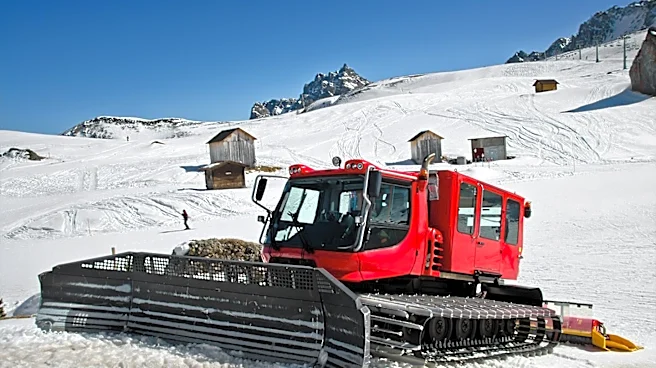
technique known as snow farming. Instead of relying on natural snowfall or early autumn cold snaps, both resorts stockpile large volumes of snow produced during the previous winter. This snow is then insulated under protective coverings throughout the summer months to prevent melting. By early October, these snow reserves are uncovered, redistributed, and groomed to create limited but functional ski terrain. Ruka has refined its snow farming methods since the late 1990s, consistently opening in October since 2016, while Levi operates on an even larger scale, storing nearly 300,000 cubic meters of snow in 2025.
Why It's Important?
The successful implementation of snow farming by Levi and Ruka has significant implications for the global ski industry, including resorts in the U.S. This technology provides a reliable and cost-effective method for extending the ski season, particularly in regions susceptible to unpredictable weather patterns or shorter winters due to climate change. By guaranteeing early-season conditions, resorts can attract more visitors, boost local economies, and provide consistent training grounds for athletes. The technique reduces reliance on energy-intensive snowmaking in warmer temperatures, offering a more sustainable approach to resort operations. The adoption of snow farming by U.S. resorts like Bogus Basin in Idaho, Burke Mountain in Vermont, Powder Mountain in Utah, and Aspen Snowmass in Colorado, using materials like Snow Secure's insulation, demonstrates its potential to stabilize and enhance the ski season across various climates.
What's Next?
As the effectiveness of snow farming continues to be demonstrated by pioneers like Levi and Ruka, more ski resorts globally, including those in the U.S., are likely to invest in and adopt this technology. This will lead to a more predictable and extended ski season, potentially mitigating the economic impacts of climate change on winter sports. Further research and development in insulation materials and snow storage techniques are anticipated to improve efficiency and reduce costs. The success of these Finnish resorts could also influence policy discussions around sustainable tourism and climate adaptation strategies within the winter sports industry, encouraging broader implementation of such innovative practices to ensure the longevity of ski seasons worldwide.
Beyond the Headlines
The widespread adoption of snow farming represents a proactive and innovative response to the challenges posed by climate change in the winter sports industry. It highlights a shift from reactive measures to strategic planning, ensuring the viability of ski resorts and the associated tourism economies. This technology also raises ethical considerations regarding resource management and environmental impact, as it involves significant energy and water use for initial snow production, even if it reduces later energy consumption. Furthermore, it underscores the ingenuity required to maintain traditional recreational activities in a changing climate, potentially inspiring similar adaptive strategies in other climate-sensitive industries. The transfer of this technology to U.S. resorts signifies a global collaboration in addressing environmental challenges and securing economic stability for winter tourism.