







What's Happening?
Paul Smith, the British designer, has opened a new two-story flagship store at 929 Madison Avenue in New York City. This marks the company's second store in the city, joining its existing location on Wooster Street in SoHo, which opened in 2020. The new 2,850-square-foot
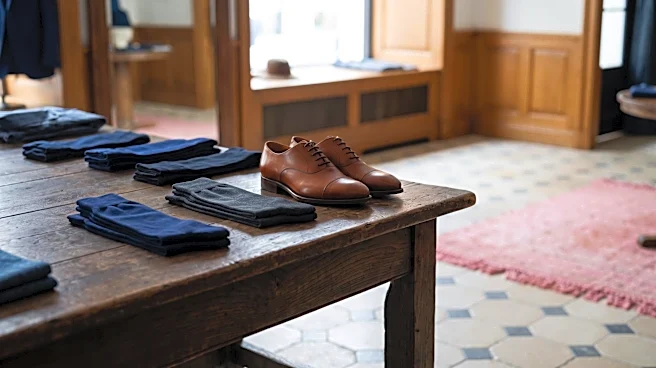
Madison Avenue shop is designed to evoke the feeling of Smith’s London home in Holland Park, featuring a stucco façade with a handcrafted mosaic of a needle and thread by French artist Alexandra Carron, paying homage to Smith’s tailoring heritage. Inside, the store incorporates octagonal floor tiles replicating those from his home, antique furniture, and reclaimed wood paneling. Key features include a large 19th-century draper’s table used to display socks, shoes, and accessories, and a vintage spoon chandelier. The men’s and women’s ready-to-wear collections are housed in a 'study' area with oak paneling and a pink-fringed rug. The second floor, known as 'Paul’s Jet Lag Room,' is dedicated to tailoring, occasion wear, and made-to-measure services, adorned with paintings, ceramics by Charlotte Salt, and a faux window offering a glimpse into Smith’s private garden.
Why It's Important?
The opening of Paul Smith's new flagship store on Madison Avenue signifies a strategic expansion and renewed focus on the North American market for the British brand. With nearly 40 years of presence in the U.S., this new location in a prime retail area like the Upper East Side aims to strengthen Paul Smith's brand visibility and market share. The store's unique design, inspired by Smith's personal home, offers a distinctive shopping experience that differentiates it from competitors and reinforces the brand's identity. This investment in a physical retail space, particularly a large flagship, indicates confidence in brick-and-mortar retail despite the growing trend of online shopping. For the U.S. retail landscape, it adds to the luxury offerings in New York City, potentially attracting both local and international clientele. The emphasis on tailoring and made-to-measure services also caters to a discerning customer base, highlighting the brand's commitment to craftsmanship and personalized service, which can drive customer loyalty and premium sales.
What's Next?
Paul Smith's president North America, Danny Power, stated that the new flagship is a commitment to ambitious plans for growth in North America. This suggests that the company may pursue further expansion or increased marketing efforts in the region. The success of this Madison Avenue location will likely influence future retail strategies, potentially leading to the opening of more stores or the enhancement of existing ones across the U.S. The brand will focus on leveraging the unique design and personalized services of the new store to attract customers and build a stronger presence. Monitoring sales performance and customer engagement at the new flagship will be crucial for Paul Smith to assess the effectiveness of this investment and guide subsequent business decisions in the U.S. market. The brand will also likely continue to integrate its online and offline retail experiences to provide a seamless customer journey.
Beyond the Headlines
The design of the new Paul Smith flagship, which meticulously recreates elements of the designer's London home, reflects a broader trend in luxury retail where stores are becoming experiential destinations rather than mere points of sale. This approach aims to create an emotional connection with customers, offering an immersive brand experience that goes beyond product display. The inclusion of unique art, antique furniture, and whimsical details like a speaking tube and a spoon chandelier contributes to a sense of discovery and individuality, aligning with the brand's quirky yet sophisticated image. This strategy can foster brand loyalty and attract consumers seeking authenticity and a narrative behind their purchases. Furthermore, the emphasis on tailoring and made-to-measure services highlights the enduring value of craftsmanship and personalized luxury in an era of mass production, appealing to consumers who prioritize quality and bespoke items. This move also underscores the cultural significance of Madison Avenue as a global hub for luxury fashion, where brands strive to make a distinctive statement.