






What's Happening?
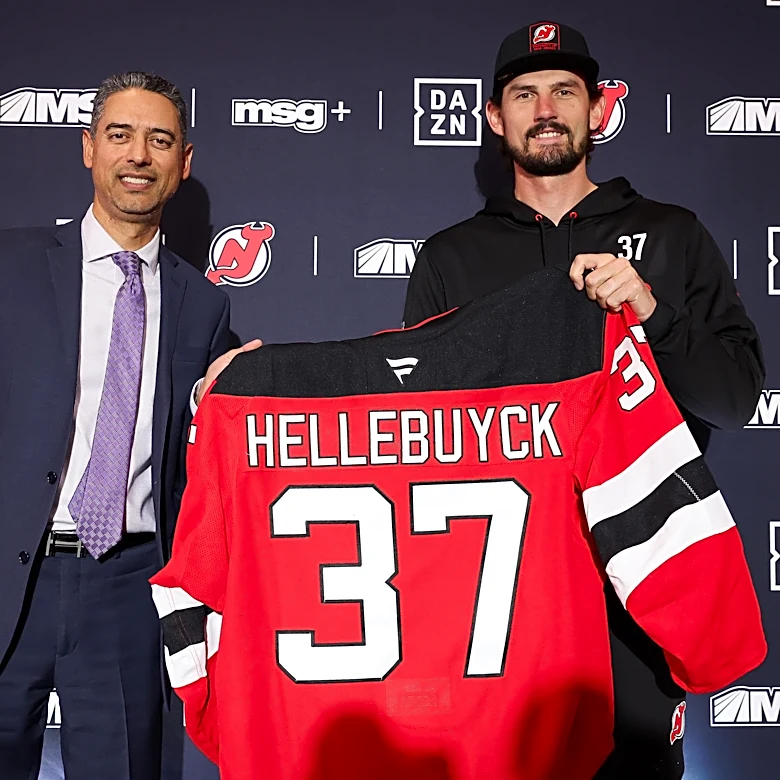
Connor Hellebuyck, the former Winnipeg Jets goaltender now with the New Jersey Devils, has until December 1st to file a grievance against his former team. This grievance would seek to recover approximately $927,000 in salary that Hellebuyck lost due to a three-week
suspension at the beginning of the current season. Hellebuyck's departure from the Jets was contentious, stemming from his request for a trade despite having five years remaining on his contract. He was suspended for missing training camp and again when he informed the organization he intended to report for the regular season, ultimately being traded on October 23rd, the day his suspension was set to end.
Why It's Important?
Hellebuyck's decision regarding the grievance could establish a significant precedent for professional athletes, particularly those who withhold services while attempting to force a trade. A successful grievance could empower players in similar situations by demonstrating a viable path to recover lost wages, potentially influencing future contract disputes and trade negotiations across the league. For the Winnipeg Jets, a successful grievance would mean an unexpected financial payout and could reflect negatively on their handling of player relations. For the New Jersey Devils, while Hellebuyck has had a strong start to his tenure, the resolution of this lingering issue could provide final closure for their star goaltender, allowing him to fully focus on his new team.
What's Next?
Hellebuyck must decide by December 1st whether to pursue the grievance. His choice will either close the final chapter of his contentious exit from Winnipeg or initiate a legal process to reclaim lost salary. If he files the grievance, it could lead to arbitration or a settlement, potentially setting a new standard for how player-team disputes are resolved in the NHL. The outcome will be closely watched by players, agents, and team management across the league, as it could influence future strategies for both players seeking trades and teams managing disgruntled stars. The situation also adds an interesting layer to his upcoming game against his former team at the Prudential Center.
Beyond the Headlines
This situation extends beyond a simple salary dispute; it delves into the complex power dynamics between professional athletes and their organizations. Hellebuyck's actions and the potential grievance highlight the increasing agency players seek in their careers, even when under long-term contracts. The 'messy departure' and the reasons cited by Hellebuyck, including 'incidents involving his family,' underscore the personal toll that professional sports can take and the factors that can drive players to seek new environments. The outcome of this grievance, regardless of Hellebuyck's decision, will contribute to the ongoing narrative about player rights, contractual obligations, and the evolving landscape of player mobility in professional sports.