




What's Happening?
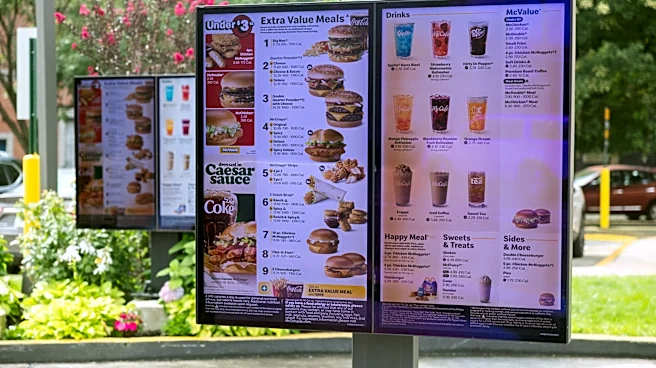
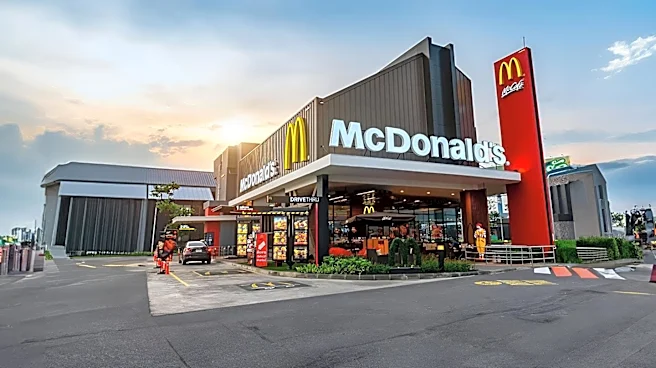
McDonald's is introducing third-party advertising on its drive-thru menu boards at hundreds of company-owned locations across the United States. This initiative has been piloted at 450 locations in recent weeks and has not yet expanded to the nearly 14,000
franchised U.S. McDonald's establishments. The company estimates this new advertising venture could generate $1 billion in revenue. Morgan Flatley, McDonald’s global chief marketing officer, stated that this presents an opportunity to generate revenue with minimal additional cost, operational complexity, or disruption to the customer experience. McDonald's views this as a way to share post-purchase content that customers might find helpful or interesting, while maintaining the core McDonald's experience. This move aligns with a broader trend of major companies like Amazon and Walmart expanding their advertising businesses, with commerce media projected to exceed $100 billion in the U.S. by 2028. While McDonald's has not specified the types of third-party advertisements, reports indicate that ads from companies like Geico have already appeared on some displays.
Why It's Important?
This strategic shift by McDonald's into third-party advertising on its drive-thru menu boards signifies a significant evolution in how quick-service restaurants are leveraging their physical and digital assets for revenue generation. The potential for $1 billion in additional revenue highlights a new, substantial income stream for the company, which could impact its financial performance and investment strategies. For the advertising industry, McDonald's entry into this space, particularly within the rapidly growing 'commerce media' sector, validates the increasing value of point-of-sale advertising. It creates new opportunities for advertisers to reach a captive audience during a purchasing decision, potentially influencing consumer choices directly at the point of sale. This move also reflects a broader trend where companies with large customer bases and physical footprints are transforming into media platforms, challenging traditional advertising models and creating a more integrated retail and advertising ecosystem. Competitors in the fast-food industry may observe McDonald's success and consider similar strategies, leading to a wider adoption of in-store or drive-thru advertising.
What's Next?
Following the pilot program at company-owned locations, McDonald's will likely evaluate the effectiveness and customer reception of the third-party advertisements. The next logical step would be to consider expanding the program to its vast network of nearly 14,000 franchised U.S. locations, which would significantly amplify the revenue potential. This expansion would involve negotiations and agreements with franchisees, potentially leading to new revenue-sharing models. The company will also need to determine the optimal types of advertisements to display, balancing revenue generation with maintaining a positive customer experience. There could be increased scrutiny from consumer advocacy groups regarding the nature and frequency of these ads, especially concerning potential distractions or perceived intrusiveness. Other fast-food chains and retailers with high customer traffic are expected to closely monitor McDonald's progress, potentially leading to a wave of similar initiatives across the retail and food service sectors as companies seek to capitalize on the growing commerce media market.
Beyond the Headlines
The integration of third-party advertising into McDonald's drive-thru experience raises deeper questions about the commercialization of public and semi-public spaces. As more companies adopt similar strategies, consumers may face an increasingly saturated advertising environment, blurring the lines between service and sales. This trend could lead to a re-evaluation of consumer tolerance for advertising in everyday interactions and potentially influence regulatory discussions around digital signage and consumer attention. Ethically, there's a consideration of how these ads might influence purchasing decisions, particularly for children or those with limited disposable income, given the captive nature of the drive-thru audience. Culturally, it signifies a further step towards a fully monetized consumer journey, where every touchpoint becomes a potential advertising opportunity. This could reshape the aesthetics of commercial spaces and alter the psychological landscape of consumer engagement, making it increasingly difficult for individuals to escape commercial messaging in their daily lives.