





What's Happening?
U.S. Trade Representative Jamieson Greer has indicated that Washington and Ottawa are making headway towards a trade agreement, despite ongoing concerns regarding Canada's increasing trade relationship with China. In an interview with Fox News, Greer stated
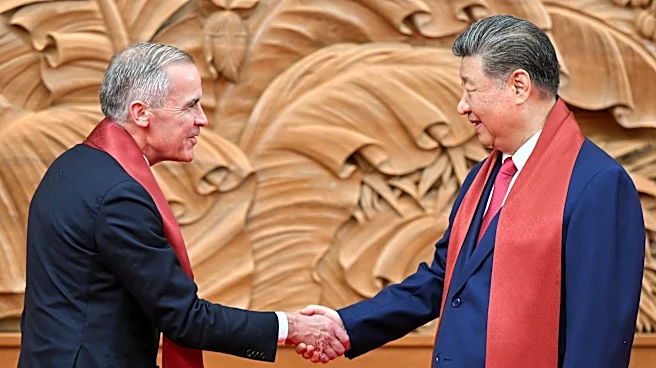
that discussions between the two nations have been constructive and that they are "fairly close on finding a landing zone." However, he criticized Canada's decision to permit more Chinese electric vehicles into the country and to broaden tariff relief for certain Chinese steel and aluminum products. Greer emphasized that the Trump administration aims to safeguard the North American economy, particularly in the auto, steel, and aluminum sectors. He highlighted a philosophical difference, noting Canada's preference for freer trade versus the U.S. focus on addressing globalization's challenges. Despite these differences, Greer pointed out that the majority of goods traded between the U.S. and Canada remain duty-free, supporting employment in both countries, and expressed a desire for an agreement beneficial to both nations.
Why It's Important?
This development is significant for U.S. trade policy and economic stability, particularly within North America. The U.S. government's focus on protecting its auto, steel, and aluminum industries underscores a broader strategy to counter perceived unfair trade practices and safeguard domestic jobs. Canada's growing economic ties with China, especially concerning electric vehicles and steel, could complicate future trade negotiations and potentially lead to increased tensions if not addressed. The philosophical divergence between the two countries—Canada's inclination towards freer trade versus the U.S.'s focus on globalization's problems—highlights differing approaches to international commerce that could influence the scope and terms of any new agreement. A successful resolution would ensure continued duty-free trade, which is crucial for numerous U.S. businesses and workers, while a failure could disrupt established supply chains and economic partnerships.
What's Next?
The ongoing discussions between the U.S. and Canada will likely continue to focus on resolving the points of contention, particularly Canada's trade relationship with China and its implications for North American industries. Future negotiations will aim to reconcile the differing trade philosophies to reach a mutually beneficial agreement. The Trump administration will likely maintain its stance on protecting key U.S. sectors, potentially pushing for stricter clauses regarding Chinese imports into Canada that could indirectly affect the U.S. economy. The outcome of these talks will determine the future of trade relations between the two countries and could set precedents for how the U.S. addresses similar concerns with other trading partners. Stakeholders in the auto, steel, and aluminum industries in both countries will closely monitor these developments for potential impacts on their operations and market access.
Beyond the Headlines
The underlying tension in these trade discussions extends beyond immediate economic concerns, touching upon broader geopolitical strategies. The U.S. stance reflects a growing concern about China's economic influence and its potential to disrupt global markets, particularly in strategic sectors like electric vehicles and advanced manufacturing. By scrutinizing Canada's trade decisions with China, the U.S. is implicitly asserting a desire for a more unified North American economic front against perceived Chinese economic challenges. This situation highlights the complex interplay between economic policy, national security, and international relations, where trade agreements become instruments for achieving wider strategic objectives. The outcome could influence not only bilateral trade but also the future of multilateral trade frameworks and the global economic order, potentially leading to a re-evaluation of supply chain dependencies and strategic alliances.