




What's Happening?
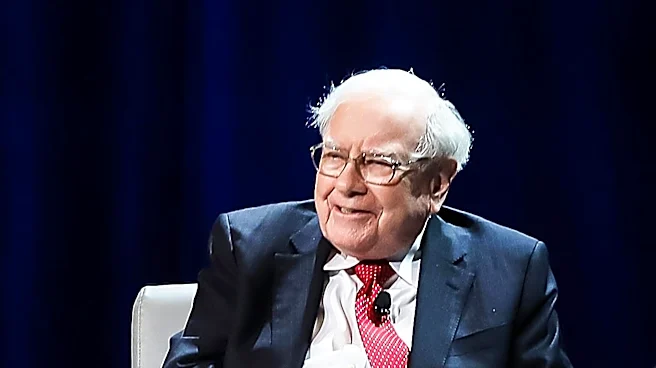
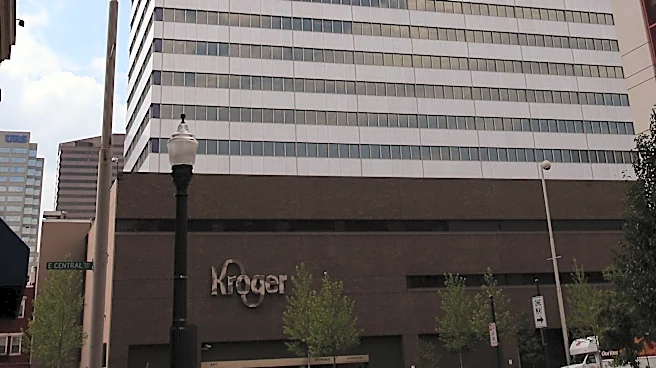
Berkshire Hathaway, led by Warren Buffett, has reduced its holding in Kroger, one of America's largest supermarket operators. According to its latest 13F filing, Berkshire Hathaway cut its Kroger stake by approximately 4 million shares, or about 10%,
bringing its total holding to 35 million shares valued at $2.06 billion. This adjustment comes after Kroger's stock experienced a strong multi-year run, with a 14.41% increase year-to-date and a 75.89% return over the past three years. Kroger, founded in 1883, serves over 11 million customers daily across 2,800 stores in 35 states, generating annual sales exceeding $132.5 billion. The company's second-quarter identical sales growth (excluding fuel) was 0.2%, and its full-year range was narrowed to 0.2%-0.8%, partly due to a 140-basis-point headwind from the Inflation Reduction Act.
Why It's Important?
This move by Berkshire Hathaway, a prominent investment firm, signals a strategic decision to secure profits from a successful long-term investment. While the 10% reduction is significant, Berkshire Hathaway remains a substantial shareholder in Kroger, indicating a potential adjustment in portfolio allocation rather than a complete divestment. For Kroger, the reduction by a major investor like Berkshire Hathaway could be interpreted in various ways by the market, though the company's strong stock performance suggests continued investor confidence. The grocery sector, as highlighted by Kroger's modest identical sales growth and the impact of the Inflation Reduction Act, faces ongoing challenges related to pricing and consumer behavior. This action by Berkshire Hathaway underscores the dynamic nature of large-scale investment strategies and their potential influence on market perceptions of established companies.
What's Next?
While Berkshire Hathaway's 13F filings do not disclose the specific reasons for selling shares, the action suggests a move to realize gains after Kroger's stock reached near all-time highs. Investors will likely monitor future filings to see if Berkshire Hathaway continues to adjust its position in Kroger or other retail holdings. Kroger, meanwhile, will continue to navigate the competitive grocery market, focusing on strategies to improve sales growth and manage operational costs, especially in light of consumer price sensitivity and regulatory impacts like the Inflation Reduction Act. The company's plans for 110 new stores and changes to their internal offerings indicate a forward-looking approach to maintaining market share and profitability.
Beyond the Headlines
Berkshire Hathaway's decision to trim its Kroger stake reflects a broader investment philosophy often associated with Warren Buffett: patience and profit-taking. This approach emphasizes the importance of knowing when to secure returns after a period of strong performance, rather than holding indefinitely. It also highlights the complexities of the retail grocery business, where even large, established players like Kroger face constant pressure from pricing, competition, and economic factors. The mention of the Inflation Reduction Act as a headwind for Kroger's sales growth points to the increasing influence of government policy on corporate performance, even in seemingly unrelated sectors. This interplay between investment strategy, market dynamics, and regulatory environment offers a nuanced view of the challenges and opportunities within the U.S. business landscape.