



What's Happening?
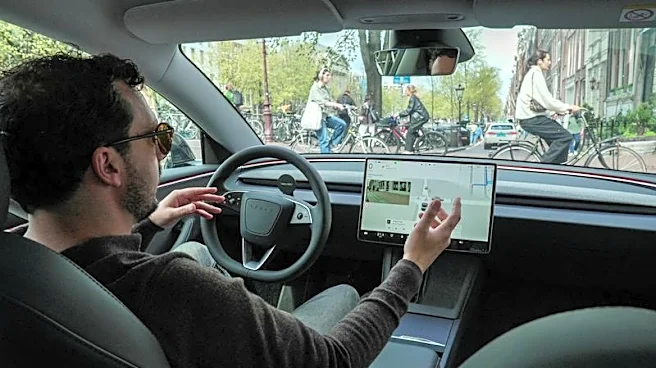
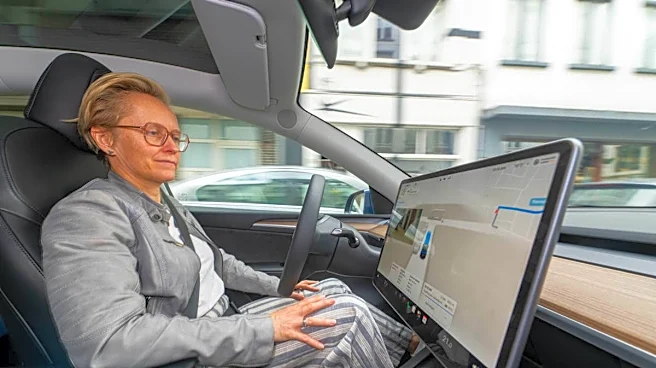
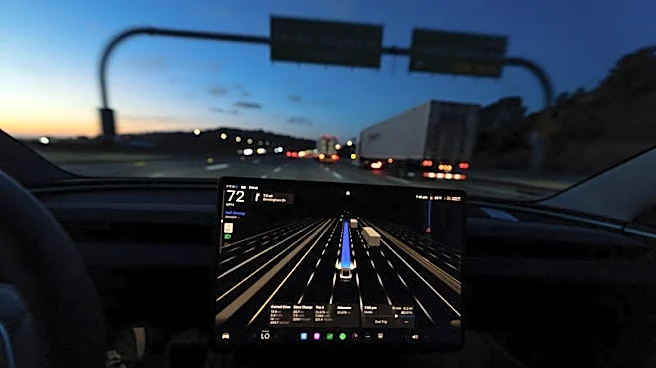
The Swedish Transport Administration (TRV) has recommended against the approval of Tesla's Full Self-Driving (FSD) software for use across the European Union unless the feature allowing vehicles to exceed legal speed limits is disabled. This recommendation
was made in a letter dated April 30, which was obtained through a freedom of information request. The TRV's stance is that allowing automated systems to exceed speed limits could undermine legal frameworks and the safety benefits of vehicle automation. The EU's Technical Committee on Motor Vehicles (TCMV) is set to discuss this issue on June 30, with a vote on the technology's rollout to follow. Tesla's FSD, which allows vehicles to steer themselves under human supervision, has already been approved in some European countries. However, the Swedish authority's opposition could impact Tesla's expansion in Europe, where it faces competition from Chinese electric vehicle manufacturers.
Why It's Important?
The decision by the Swedish Transport Administration to oppose Tesla's FSD technology due to speeding concerns highlights the ongoing regulatory challenges faced by autonomous vehicle technologies. If the EU follows Sweden's recommendation, it could significantly impact Tesla's market strategy in Europe, potentially slowing its growth in a region where it is already facing stiff competition. The outcome of this regulatory process could set a precedent for how autonomous driving technologies are evaluated and approved in the future, influencing both consumer safety standards and the competitive landscape for electric vehicle manufacturers. The decision also underscores the importance of balancing technological innovation with regulatory compliance and public safety.
What's Next?
The EU's Technical Committee on Motor Vehicles will meet on June 30 to discuss the Swedish Transport Administration's concerns. A vote on the EU-wide rollout of Tesla's FSD technology will follow. If the committee decides against the rollout, the provisional approval granted by the Dutch regulator could lapse, affecting national approvals based on it. This decision will be closely watched by other EU member states and could influence their regulatory approaches to autonomous vehicle technologies. Tesla may need to adjust its software to comply with European regulations, which could involve disabling the speed limit override feature.