



What's Happening?
The complete visual record of Eminem's 1997 Rap Olympics battle loss to Otherwize in Los Angeles remains elusive, nearly three decades after the event. This missing footage represents a significant gap in the documented competitive history of hip-hop.
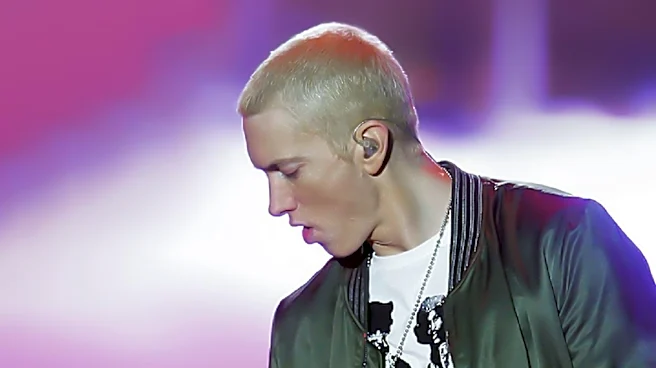
The mystery resurfaced in October 2026, following interviews with Otherwize by PANDA CHOP! News, which provided further recollections of the competition. In 1997, Marshall Mathers, known as Eminem, was an aspiring artist whose debut album 'Infinite' had not achieved mainstream success. He was exploring his Slim Shady persona and seeking national distribution. The Rap Olympics, organized by music industry advocate Wendy Day, aimed to showcase technically accomplished performers to an industry audience. The event included both an individual battle, where Eminem lost to Otherwize, and a separate team exhibition, which sometimes leads to confusion in historical accounts. While some video fragments of Eminem at the event exist, the full final battle has not been located or made publicly accessible with verified origins.
Why It's Important?
The absence of the complete 1997 Rap Olympics footage is significant for hip-hop history and the understanding of Eminem's early career. It prevents a full appreciation of the artistic environment of Los Angeles's underground rap scene at the time, which included performers known for their improvisation and audience engagement. The event was a meeting of developing artists, and the missing footage hinders a comprehensive historical assessment of their performances, independent of their later commercial success. For archivists and historians, locating the full recording would provide crucial context, including the exchanges, audience reactions, and how performers adapted to the conditions. This would offer a more nuanced view than simply focusing on Eminem's eventual rise to superstardom, acknowledging the achievements of artists like Otherwize within their own competitive traditions. The ongoing search highlights the broader challenges in preserving hip-hop's historical archives.
What's Next?
The immediate next step involves continued efforts by researchers and collectors to locate and authenticate the complete 1997 Rap Olympics footage. Any potential discovery would require rigorous assessment for continuity, source generation, and provenance, including examining original media labels and documentation of transfers. Researchers would also compare new material with known excerpts to match voices, clothing, and stage details. Beyond locating the footage, public access would necessitate addressing the rights of performers, filmmakers, and other rights holders, as the legal right to distribute is separate from the recording's survival. Competing explanations for the footage's whereabouts exist, including allegations that Eminem acquired the recordings or that the organizer never received the expected footage from the videographer. Without verifiable evidence, these remain unestablished claims, underscoring the need for a clear chain of custody.
Beyond the Headlines
The enduring mystery surrounding the 1997 Rap Olympics footage points to deeper issues within the preservation of hip-hop history. It underscores the challenge of documenting ephemeral live performances, especially from underground scenes, which often lack the formal archiving of mainstream events. The narrative surrounding Eminem's loss and subsequent rise often overshadows the context of the battle itself and the achievements of other artists like Otherwize. Recovering this footage would not only fill a gap in Eminem's biography but also provide invaluable insight into the collaborative and competitive nature of rap battles, where each performance is a response to the immediate environment. This situation also raises ethical questions about the ownership and accessibility of historical cultural artifacts, particularly when they involve figures who later achieve global fame. The continued public interest in this missing footage highlights the cultural value placed on authentic historical records within the hip-hop community.