






What's Happening?
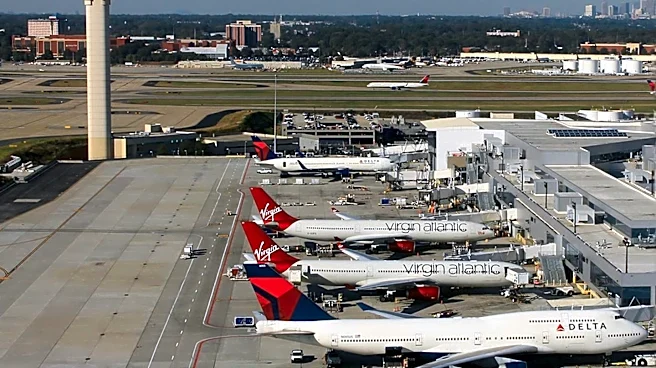
Ed Bastian, CEO of Delta Air Lines, has voiced strong disapproval regarding Heathrow Airport's decision to relocate Delta's operations from Terminal 3 to Terminal 4. This move, slated for 2028, would separate Delta from its joint venture partner, Virgin
Atlantic, with whom it has shared Terminal 3 for over a decade. Bastian described the decision as 'short-sighted, deeply disappointing and bad for airline consumers,' emphasizing that the co-located operation has served millions of customers by offering convenient connections, premium amenities, and access to an expanded global network. Delta has stated its intention to 'pursue all available remedies to correct this decision' and urged Heathrow Airport Limited to reconsider, suggesting potential legal action. Heathrow Airport, however, maintains that the relocation is necessary to optimize terminal capacity, reduce congestion, improve passenger flow, and manage costs amidst growing demand.
Why It's Important?
This dispute carries significant implications for U.S. airline operations and transatlantic travel. Delta's partnership with Virgin Atlantic is a crucial component of its international strategy, providing a competitive alternative for UK travelers across the Atlantic. The forced separation undermines years of investment in integrated customer benefits, potentially disrupting seamless travel experiences for passengers connecting between the two airlines. Passengers would face the inconvenience of a bus transfer between terminals, adding time and complexity to their journeys. For Delta, this could lead to operational inefficiencies and a diminished competitive edge, impacting its profitability and market share on key transatlantic routes. The situation also highlights the broader challenges faced by airlines operating in capacity-constrained international hubs, where airport decisions can significantly affect airline alliances and passenger services.
What's Next?
Delta Air Lines is committed to exploring all available remedies to challenge Heathrow Airport's decision, which could include legal action. Virgin Atlantic is also reviewing its legal options, and the SkyTeam alliance, of which Delta is a founding member, has expressed concerns about its members being put at a competitive disadvantage. The outcome of these efforts will determine whether the relocation proceeds as planned in 2028 or if Heathrow Airport will be compelled to reconsider its decision. The situation could lead to protracted negotiations or legal battles, potentially delaying the implementation of the terminal changes or forcing a different resolution. Travelers planning future transatlantic journeys with Delta and Virgin Atlantic should monitor developments closely, as the final decision will impact their travel experience.
Beyond the Headlines
The conflict between Delta and Heathrow Airport underscores the complex power dynamics between airlines and major international airports. While airports aim to optimize their infrastructure for overall efficiency and capacity, airlines often prioritize the seamless integration of their operations and partnerships to enhance customer experience and competitive advantage. This incident could set a precedent for how such disputes are resolved in the future, particularly in highly congested global hubs. It also brings to light the delicate balance between airport management's need for operational flexibility and airlines' long-term strategic investments in alliances and customer service. The resolution of this issue could influence future airport development plans and airline partnership strategies worldwide, emphasizing the need for collaborative planning to avoid disruptions to the global air travel ecosystem.