



What's Happening?
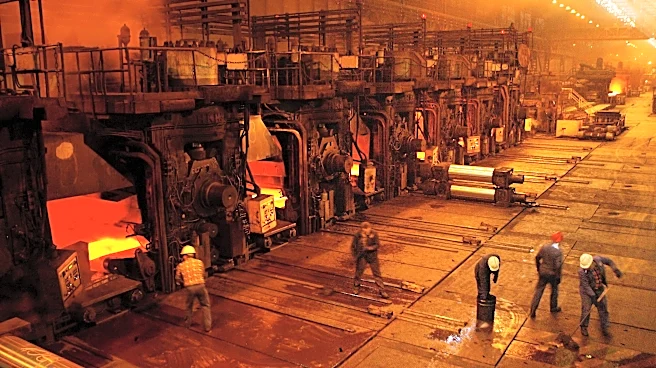
The rapid construction of data centers in the U.S., driven by the artificial intelligence boom, is causing a significant tightening in domestic steel supplies. According to Shanghai Metals Market (SMM), U.S. steel buyers are increasingly turning to Asian
imports as local availability of structural sections, reinforcing bar, and heavy plate diminishes. This increased demand has widened the price spread between US Midwest hot-rolled coil and imported materials, reopening arbitrage opportunities for suppliers from Vietnam, South Korea, Japan, and India. Market participants anticipate that this tightness will persist as investment in data centers and grid infrastructure continues. Beyond steel, the construction and operation of these facilities are also driving up demand for other raw materials, particularly copper and aluminum, which are crucial for electrical infrastructure, cooling systems, and power networks.
Why It's Important?
This development highlights a direct economic consequence of the AI race, impacting fundamental industrial sectors like steel and mining. The increased reliance on imports for steel could affect domestic manufacturing capabilities and potentially lead to higher costs for construction projects across various industries. For the mining sector, this surge in demand for copper and aluminum presents both opportunities and challenges. While it creates new revenue streams, it also exacerbates existing supply constraints for these critical metals, which already face issues like declining ore grades and lengthy project development timelines. This could lead to increased commodity prices, affecting a wide range of industries dependent on these materials and potentially contributing to inflationary pressures.
What's Next?
The demand for steel, copper, and aluminum is expected to remain elevated as data center construction and grid investments continue to accelerate. This sustained demand will likely keep import shares high in the U.S. steel market, despite existing tariffs and anti-dumping duties. Miners will face continued pressure to increase production of copper and aluminum, potentially leading to new exploration and development projects, though these often have long lead times. The situation could also spur innovation in material science, seeking alternative, more readily available, or sustainable materials for data center construction. Furthermore, the increased cost and potential scarcity of these materials might influence the design and location strategies for future data centers, pushing for more efficient use of resources.
Beyond the Headlines
The impact of data center expansion on commodity markets reveals a deeper interconnectedness between technological advancement and the physical economy. The AI boom, often perceived as purely digital, has substantial tangible footprints, driving demand for raw materials and influencing global supply chains. This situation underscores the concept of 'embodied energy' and 'embodied materials' in digital infrastructure, highlighting the environmental and resource costs associated with the digital world. It also raises questions about resource security and the geopolitical implications of relying on international markets for critical materials needed to build advanced technological infrastructure. The long-term implications could include a re-evaluation of domestic mining and manufacturing capacities to support strategic technological growth.