




What's Happening?
Pakistan has officially joined the International Olive Council (IOC), marked by a flag-raising ceremony at the IOC headquarters in Madrid. This accession signifies Pakistan's integration into the international olive sector and aims to strengthen cooperation
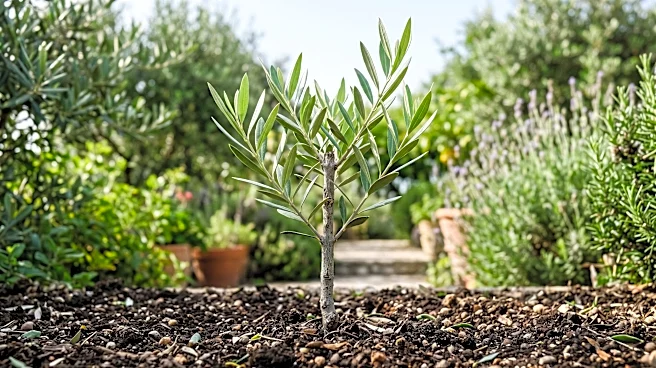
in olive cultivation and production. The ceremony was attended by H.E. Dr. Zahoor Ahmed, Ambassador of Pakistan to Spain, along with diplomatic representatives from other IOC member countries and officials from the Spanish government. A symbolic olive tree was planted in the IOC's Garden of Peace to commemorate the occasion. IOC Executive Director Jaime Lillo highlighted Pakistan's potential for olive cultivation, noting its location outside the traditional Mediterranean olive-growing region, which reflects the global expansion of the olive industry. Ambassador Ahmed emphasized the historic nature of this milestone for Pakistan, acknowledging the efforts of farmers in developing olive cultivation in previously underutilized areas. Pakistan formally joined the IOC in May 2026, following discussions during the 122nd session of the IOC Council of Members in November 2025, where a Pakistani delegation outlined the country's ambitions for its olive sector.
Why It's Important?
Pakistan's entry into the International Olive Council is significant for several reasons. It opens new avenues for international cooperation in olive cultivation, research, technical training, and the establishment of quality standards. This membership will facilitate the exchange of expertise, which is crucial for Pakistan as it seeks to develop a sustainable and competitive olive industry. The country has considerable potential for olive growing in regions such as Potohar, Khyber Pakhtunkhwa, and Balochistan. By leveraging IOC resources and knowledge, Pakistan aims to boost rural livelihoods, promote sustainable agricultural development, and reduce its reliance on imported edible oils. For the IOC, Pakistan's accession strengthens its international dimension and its commitment to supporting emerging olive-producing nations, further globalizing the olive sector beyond its traditional geographical boundaries. This move could also attract foreign investment and partnerships in Pakistan's agricultural sector, contributing to economic diversification.
What's Next?
Following its accession, Pakistan is expected to actively engage with the International Olive Council to capitalize on the opportunities presented by its membership. This will likely involve participating in IOC programs related to olive cultivation best practices, research initiatives, and technical training for its farmers and agricultural experts. The country will also work towards aligning its olive oil production and quality standards with international benchmarks promoted by the IOC. Furthermore, Pakistan may seek to attract international investment and partnerships to develop its olive processing infrastructure and expand its market reach for olive products. The IOC, in turn, will deepen its cooperation with Pakistan, providing support and guidance to help the country achieve its goals in the olive sector. This collaboration is anticipated to foster sustainable growth, enhance product quality, and contribute to Pakistan's agricultural economy in the long term.
Beyond the Headlines
Pakistan's strategic move to join the International Olive Council extends beyond immediate economic benefits, touching upon broader themes of agricultural diversification, environmental sustainability, and global trade integration. By investing in olive cultivation, Pakistan is not only creating new economic opportunities but also promoting a crop known for its resilience in arid and semi-arid regions, which can contribute to climate change adaptation efforts. The development of a robust olive industry can also empower rural communities, offering alternative livelihoods and reducing migration to urban centers. Ethically, promoting sustainable olive farming practices aligns with global efforts towards responsible agriculture and food security. Culturally, the olive tree holds significant historical and symbolic value, and its widespread cultivation could foster a deeper connection to agricultural heritage. This initiative positions Pakistan as a more active participant in global agricultural markets, potentially enhancing its soft power and diplomatic ties through shared economic interests in the olive sector.