
What's Happening?
AguaFox is expanding its precision irrigation dealer network across the U.S. Midwest to connect commercial soybean growers with authorized dealers. This expansion includes state-specific directories that
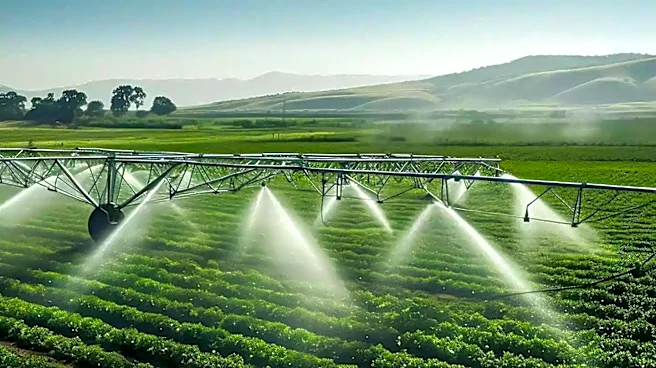
list dealers by service territory, equipment brands, and financing options. Currently, directories for Iowa and Nebraska are live, with Missouri, Kansas, Illinois, Indiana, and Minnesota set to follow. The network aims to meet the increasing demand for center pivot systems, subsurface drip irrigation (SDI), and precision control technology. The initiative is supported by the growing precision irrigation market, which was valued at $8.7 billion in 2025 and is projected to reach $16.6 billion by 2033. Dealers in the network can help growers qualify for USDA Environmental Quality Incentives Program (EQIP) cost-share funding, which covers a significant portion of installation costs.
Why It's Important?
The expansion of the AguaFox network is significant as it addresses the rising demand for precision irrigation solutions among soybean growers in the Midwest. This move is crucial for enhancing agricultural productivity and sustainability, as precision irrigation technologies help optimize water usage and improve crop yields. By facilitating access to EQIP cost-share funding, the network also supports financial accessibility for farmers, enabling them to invest in advanced irrigation systems. This development could lead to increased adoption of precision agriculture technologies, contributing to the growth of the U.S. precision agriculture market, which was valued at approximately $3.68 billion in 2025.
What's Next?
As the AguaFox network expands, more dealers are expected to join, providing greater access to precision irrigation technologies for farmers across the Midwest. The launch of additional state directories will further enhance the network's reach. Growers interested in EQIP funding should apply early, as state-specific deadlines for ranking and funding opportunities vary. The network's growth may also prompt other companies in the precision agriculture sector to expand their offerings, potentially leading to increased competition and innovation in the market.