




What's Happening?
Swarmer, a defense technology company with headquarters in Austin, Texas, and engineering teams in Kyiv and Warsaw, has signed an agreement to acquire certain intellectual property assets from Vataga Drone, a Ukrainian defense technology company. This
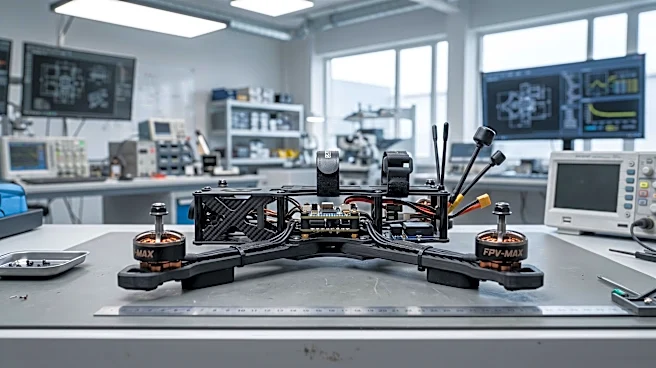
acquisition includes Vataga's hardware and software intellectual property portfolio, such as FPV drone airframe designs, ground control equipment, development tools, and manufacturing documentation. As part of the deal, Vataga CEO Maksym Melnyk and 14 members of his hardware engineering team will join Swarmer, while Vataga Drone will continue to operate as an independent manufacturing company. Swarmer, which went public on Nasdaq in March, specializes in autonomous swarm coordination, integration of multidomain unmanned systems, AI-based collaborative autonomy, and command-and-control software for distributed robotic operations. Vataga Drone, founded in 2023 and based in Kyiv, focuses on designing and manufacturing strike FPV drones, proprietary electronics for initiating munitions, and drone interception systems. The two companies aim to scale the deployment of FPV drones and interceptors operating in swarms under real combat conditions.
Why It's Important?
This acquisition is significant for the advancement of AI-powered drone technology, particularly in military applications. By integrating Vataga Drone's proven hardware engineering capabilities with Swarmer's advanced software for autonomous swarm coordination, the combined entity is poised to develop more integrated, end-to-end drone systems. This move could lead to more sophisticated and effective drone swarms, which are increasingly critical in modern warfare. The ability to control hundreds of autonomous platforms in real-time, as Swarmer's technology allows, offers a substantial tactical advantage. For the U.S. defense sector, this collaboration highlights the growing importance of international partnerships in developing cutting-edge defense technologies and the role of U.S.-based companies in these innovations. The deployment of such technology in combat operations, as seen in Ukraine, demonstrates its real-world impact and potential to reshape military strategies, offering more cost-effective and adaptable solutions compared to traditional weaponry.
What's Next?
Following the acquisition, Swarmer and Vataga Drone will focus on scaling the deployment of FPV drones and interceptors that operate in swarms under real combat conditions. The integration of Vataga's hardware engineering team and intellectual property into Swarmer is expected to accelerate the development of integrated, end-to-end products. This strategic move suggests a continued push towards more autonomous and AI-driven defense systems. The companies' combined efforts will likely lead to further advancements in drone swarm technology, potentially influencing future military procurement and defense strategies globally. The ongoing combat operations in Ukraine will serve as a critical testing ground for these enhanced capabilities, providing valuable data and insights for further development and refinement. This could also pave the way for more collaborations between U.S. and Ukrainian defense technology firms, fostering innovation in the sector.
Beyond the Headlines
The acquisition underscores a broader trend in defense technology: the increasing reliance on artificial intelligence and autonomous systems, particularly in drone warfare. The development of AI-based collaborative autonomy and command-and-control software for distributed robotic operations raises ethical and strategic questions about the future of warfare, including the level of human involvement in decision-making for autonomous weapons. The ability of drone swarms to adapt in real-time and coordinate with one another presents a significant challenge to traditional air defense systems, which are often designed for larger, more predictable threats. This shift necessitates a re-evaluation of defense strategies and investments in counter-drone technologies. Furthermore, the financial performance of Swarmer, with widening net losses despite increased revenue, highlights the substantial investment required in research and development for these advanced technologies, and the long-term commitment needed to bring them to market and achieve profitability.