





What's Happening?
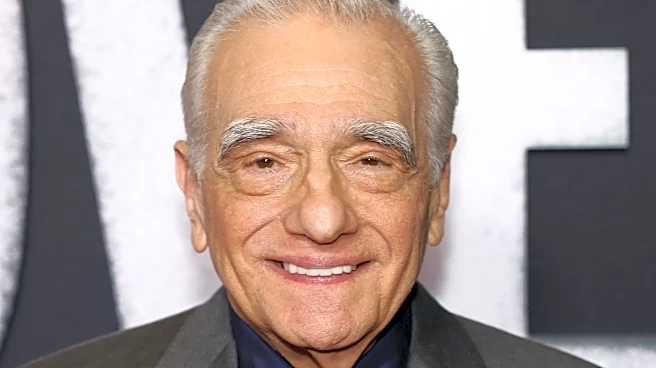
Acclaimed director Martin Scorsese revealed that he passed on directing two major studio films in the 1980s: 'Beverly Hills Cop' and 'Witness.' According to a 2020 Deadline interview, Scorsese was offered numerous scripts after his 1982 film 'The King
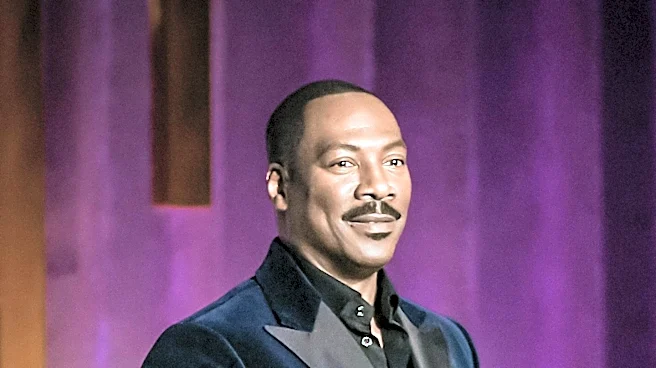
of Comedy' underperformed at the box office. He stated, 'I was getting many scripts. 'Witness,' 'Beverly Hills Cop,' there were a lot. But I didn't want to make those.' 'Witness,' released in 1985, was ultimately directed by Peter Weir and starred Harrison Ford, earning an Oscar. 'Beverly Hills Cop,' released in 1984, became a massive box office success, grossing over $230 million worldwide, and solidified Eddie Murphy's status as a movie star. The film was directed by Martin Brest and received an Academy Award nomination for its screenplay. Scorsese's decision to decline these projects highlights a period where he considered working within the studio system but ultimately chose a different path for his career.
Why It's Important?
Scorsese's decision to forgo directing 'Beverly Hills Cop' and 'Witness' illustrates a pivotal moment in his career and offers insight into the artistic choices of a major filmmaker. These films went on to become significant commercial and critical successes, shaping the careers of their respective directors and stars. Had Scorsese directed them, the films would likely have taken on a very different tone and style, potentially altering their cultural impact and his own filmography. This revelation underscores the numerous paths a director's career can take and the importance of artistic alignment in project selection. It also highlights the contrast between commercially driven studio projects and Scorsese's more auteur-driven approach, which often explores complex psychological and social themes. The success of these films under other directors further demonstrates the diverse talent within Hollywood and the varied interpretations a script can undergo.
What's Next?
This historical insight into Scorsese's career choices doesn't directly point to immediate future actions but rather enriches the understanding of his past decisions and artistic trajectory. It reinforces his reputation as a director who prioritizes his unique vision over commercial pressures, a characteristic that has defined his subsequent work. For film enthusiasts and scholars, this information adds another layer to the ongoing analysis of his filmography and the broader landscape of 1980s cinema. It also prompts speculation about 'what if' scenarios, encouraging discussions on how these iconic films might have differed under Scorsese's direction. This kind of retrospective analysis often informs future critical perspectives on filmmakers' careers and their influence on the industry.
Beyond the Headlines
The story of Scorsese passing on these films delves into the deeper implications of artistic integrity versus commercial viability in Hollywood. It showcases a director's commitment to a particular style and thematic focus, even when presented with opportunities for mainstream success. This decision reflects a broader tension within the film industry between art and commerce, where filmmakers often navigate the balance between personal expression and audience appeal. Scorsese's choice to pursue projects more aligned with his artistic sensibilities, even after a box office disappointment, speaks to the resilience and conviction required to maintain a distinct authorial voice in cinema. It also highlights how a director's influence can extend beyond the films they make, shaping the industry through the choices they decline as much as those they accept.